
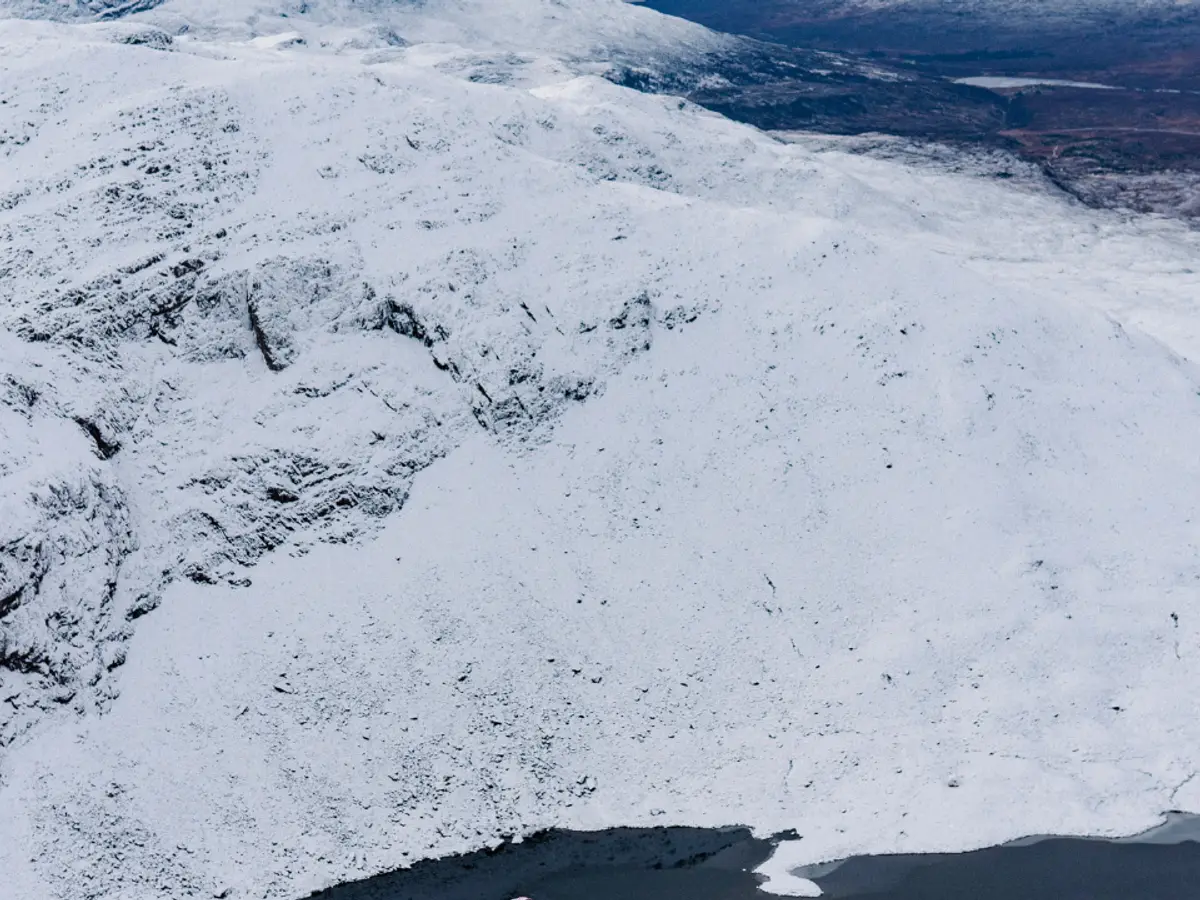
A Portugal-sized hole opened in Antarctica’s Breid Bay in August 2024. Indian scientists found that extreme weather, including intense atmospheric rivers and marine heatwaves, caused this massive polynya. Earth scientist Jeebanjyoti Swain warned, "polynyas will become a frequent occurrence in Antarctica" as climate change continues to warm the world's oceans.
A team of Indian scientists has discovered the reason for a massive hole that opened up in Antarctica in 2024. A large open body of seawater surrounded by ice was recorded in Breid Bay in East Antarctica, leaving scientists perplexed. Now the reason for this polynya has been revealed.
In August 2024, a vast hole, about the size of Portugal, opened up in Breid Bay in East Antarctica, when it is typically entirely covered in ice from July through August. This hole is known as a polynya, which is a region of open seawater surrounded by sea ice. A team of researchers from India have now found the reason for this anomaly.
Earth scientist Jeebanjyoti Swain says a series of extreme weather conditions led to this area of ice opening up. This included intense atmospheric rivers and marine heatwaves. The findings published in Geophysical Research Letters state that these "intense atmospheric rivers, commonly known as 'rivers in the sky,' transported large amounts of moisture from lower latitudes into the Antarctic region." This, along with a persistent southward flow, "drove sea‐ice poleward."
Notably, at least six such rivers were recorded from July to August that year. They were among the strongest mid-winter moisture transport events ever seen. They worked together to enhance "downwelling long-wave radiation, atmospheric warming, warm snowfall, and positive heat flux into the ocean."
The researchers also mention the "Ekman suction" as one of the reasons, which brought "warmer subsurface water toward the surface", which caused the upper ocean to warm. Sustained marine heatwaves added to the problem and prevented sea ice from freezing. Ekman suction is the vertical upward motion of deep water into the surface ocean layer caused by wind-driven transport.
It carried upper circumpolar deep water, which is warm and turbulent, to the surface, which slowed and stopped the water from freezing. With climate change becoming a stark reality, Swain has warned that polynyas will become a frequent occurrence in Antarctica. The warming world strengthens these atmospheric rivers and causes frequent and persistent heat waves in both air and sea.
Antarctica is already facing one of its worst conditions, as a study noted that the frozen continent reached its third-lowest level of winter sea ice extent on record. Worryingly, the four lowest winter sea ice records occurred in the last four years. The lowest winter ice was recorded in 2023, with 2024 notching the second position.