
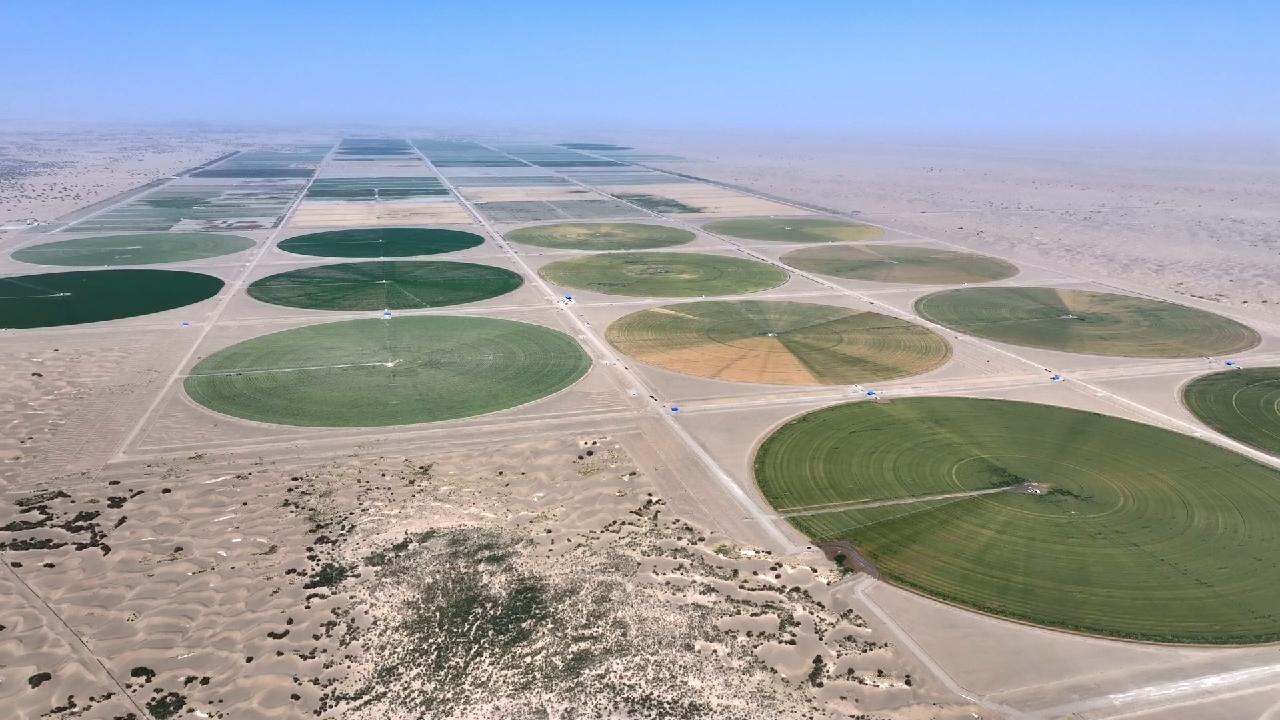
Farmers in NW China are using Beidou-powered seed drills to plant 35,000 mu of winter wheat in perfect circles. These fields sit along the Taklimakan Desert edge. The system uses snowmelt for irrigation, which saves water. Planting should finish by October 20, helping turn sandy dunes into productive, green farmland.
From the air, they look like something out of science fiction: perfect green circles stamped into an ocean of sand, each one nearly a kilometer across, neatly arranged along the southern edge of China's largest desert, the Taklimakan.
Across the southern edge of the Taklimakan Desert, 35,000 mu (over 23 square kilometers) of winter wheat is being sown in fields shaped like perfect circles. The seed drills are guided by Beidou, China's satellite navigation system, and local authorities expect planting to be completed around October 20.
The circles are the signature of center-pivot irrigation. A long sprinkler arm rotates around a central point, drawing water from snowmelt in the Kunlun Mountains and spreading it evenly across land that was once rolling sand dunes. The system uses far less water than traditional flood irrigation.
To cope with poor, sandy soil, farmers rotate winter wheat with oats or alfalfa. These crops help stabilize the sand, improve the soil and provide feed for livestock. The project is part of a broader effort to turn desertified land into farmland - and a vivid example of how precision agriculture is taking root in one of the world's driest regions.