
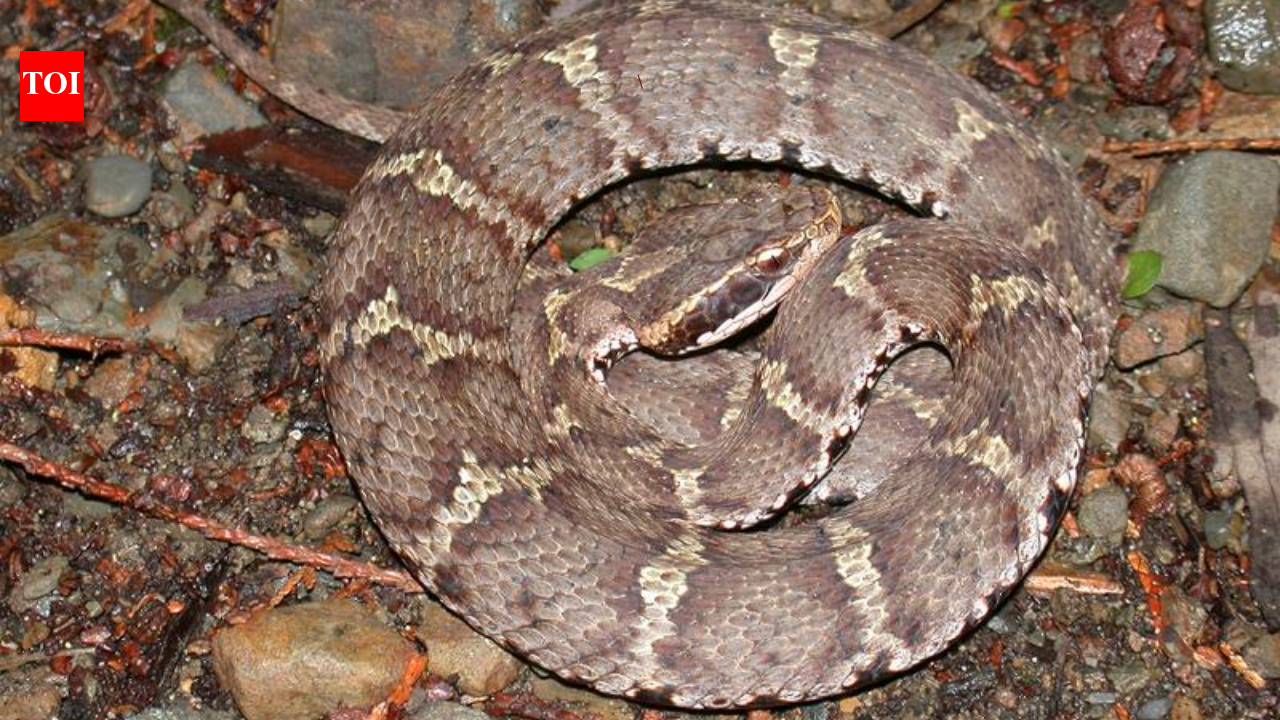
The Mamushi snake, or Gloydius blomhoffii, is a venomous pit viper found across much of Japan. Research shows these snakes live in forests, grasslands, and near paddy fields. Encounters between people and snakes often happen during warmer months. Experts say the venom causes local pain and swelling after a bite.
The Mamushi snake (Gloydius blomhoffii) is a venomous pit viper found across much of Japan, where it occurs in environments ranging from forests and grasslands to areas around paddy fields and streams. It is a relatively small snake, but its bites can cause considerable local swelling and, in severe cases, other complications. Research from Kyoto and Hokkaido has also documented differences in body size, reproduction, activity and behaviour between populations. Studies of snakebite cases in Japan show that encounters are particularly common during the warmer months and often take place during the daytime. Here is a closer look at the Mamushi's characteristics, habitat, diet, reproduction, venom and conservation status.Scientific nameThe scientific name of the Mamushi is Gloydius blomhoffii. It belongs to the pit viper group and is one of the venomous snakes found in Japan. Akira Mori's 2021 study describes the species as a common pit viper distributed throughout Japan except Okinawa Prefecture.The species has also been the subject of research covering its reproduction, body size, activity patterns, diet and interactions with people. These studies have examined populations in different parts of Japan, including Kyoto and Hokkaido, allowing researchers to compare ecological traits across its range.Common nameThe snake is commonly known as the Mamushi. The name is widely used in Japan and in scientific and medical literature discussing bites caused by Gloydius blomhoffii. Clinical research has described Mamushi bites as an important form of snakebite encountered in Japan.The name therefore appears in both ecological research and medical studies. While ecological studies examine the snake's natural history, clinical research focuses on the effects of its venom when people are bitten.FamilyThe Mamushi belongs to the family Viperidae and is a pit viper. Its venomous bite is associated with local tissue effects, while more serious cases can involve wider complications.A clinical study of 114 Mamushi bite cases reported that the venom contains several types of enzymes, including proteases, phospholipases and hyaluronidases. The researchers linked these components with local pain and swelling following bites.DistributionThe Mamushi is distributed widely across Japan. Mori's 31-year field study describes G. blomhoffii as occurring throughout Japan except Okinawa Prefecture. The study also compared populations from different parts of the country and found geographical differences in body size.The cited IUCN assessment additionally records the species from Hokkaido, Honshu, Kyushu and Shikoku in Japan and from the Kuril Islands of the Russian Federation. This broad distribution means that the species occurs across different climatic and environmental conditions.HabitatMamushi snakes have been recorded in a variety of environments. Mori's research site in Ashiu, northeastern Kyoto, included dense forest, grasslands, paddy fields, rivers and streams. The study therefore provides evidence of the species using both wooded and more open environments.Clinical records also show how frequently people encounter Mamushi in rural surroundings. In the study of 114 bites, 31.6% occurred on farms or in rice fields and 29.8% occurred in yards. Other reported locations included bushes, riversides, roads and mountain areas.SizeBody size varies between Mamushi populations. In Mori's Kyoto study, the mean snout-vent length was 443.6 mm for males and 461.4 mm for females. Female body mass was also higher on average than male body mass in the sampled population.The same research found that Kyoto Mamushi were smaller than snakes from the northernmost part of the species' range but larger than those from the southernmost part. This means that body size does not simply follow a straightforward north-to-south pattern.Sexual size differenceFemale Mamushi were larger than males in the Kyoto population studied by Mori. The research recorded significant differences in snout-vent length and body mass, while males had relatively longer tails.A separate study from Hokkaido also found that adult females were larger than males. The difference was particularly relevant to reproduction, because female body size was associated with litter characteristics in that population.ActivityMamushi activity has been recorded during daylight hours. Mori's long-term observations in Kyoto included snakes encountered during daytime field surveys, and the author suggested that the species may be more active during the day than some earlier descriptions indicated.The clinical study of 114 bites also found a clear daytime pattern in human encounters. From June to September, approximately twice as many recorded bites occurred during the daytime as at night. The researchers noted that the warmer months and daytime were the periods when bites were most commonly recorded.Body temperatureBody temperature differs between reproductive groups. In Mori's Kyoto observations, pregnant females had a higher mean body temperature than males and non-pregnant females. At a given air temperature, pregnant females also maintained higher body temperatures.The study linked this pattern to the thermal characteristics of reproduction, although the observations were specific to the population and conditions investigated. The finding provides an indication of how reproductive status can influence the body temperature of Mamushi snakes.ReproductionMamushi females give birth to live young. In the Hokkaido study, researchers followed pregnant females and recorded an average litter size of 6.6 offspring. The Kyoto study recorded 10 females giving birth in captivity between September and October. Their litters contained between two and six young, with an average litter size of four when stillborn young were included. These figures illustrate that litter size can differ between populations and studies.DietThe Mamushi is a generalist feeder. In Mori's Kyoto study, stomach contents were found in 9.1% of the snakes examined, and the identified prey included rodents, frogs and newts.The study also recorded the Japanese fire-bellied newt (Cynops pyrrhogaster) among the prey. The presence of several different types of prey in the stomach contents indicates that the species is not restricted to a single food source.VenomMamushi venom contains several enzymes, including proteases, phospholipases and hyaluronidases. Clinical research has associated these components with local pain, redness and swelling after a bite. The venom also contains haemorrhagic factors that have been associated with bleeding-related effects.The severity of a bite can vary. In the 114-case clinical study, all patients experienced local swelling at the bite site, while the recorded clinical grades ranged from Grade I to Grade V. The researchers also reported elevated creatine phosphokinase levels in the most severe group.Human encountersMamushi encounters are particularly relevant in rural areas. The clinical study of 114 cases found that elderly men represented a substantial proportion of the patients, while the upper limbs were the most frequently affected body area, accounting for 64.9% of bites.The same study recorded most bites between June and October. Farms and rice fields were the most frequently reported accident locations, followed by yards. These findings come from a single general hospital in Japan and therefore describe the patients treated there rather than every Mamushi bite occurring across the country.Conservation statusThe cited IUCN assessment places Gloydius blomhoffii in the Least Concern category and records its population trend as stable. The assessment covers the species globally and includes its distribution in Japan and the Russian Federation.The species is nevertheless affected by direct human interactions. The Hokkaido research found that direct human-caused mortality was particularly high among pregnant females (70.2%), followed by non-pregnant females and then males. The researchers highlighted this as a concern because reproductive females are important to population replacement.Main threatsDirect human-caused mortality is an important issue identified in the ecological research. In the Hokkaido population, pregnant females experienced the highest level of human-caused mortality, followed by non-pregnant females and males. The researchers noted that the species' slow life history and the tendency of pregnant females to gather at predictable locations could increase the significance of such losses.The cited IUCN assessment also records biological resource use, specifically hunting and trapping of terrestrial animals, as a threat. The assessment lists human and veterinary medicine and human food among recorded uses of the species. These pressures are relevant when considering the relationship between Mamushi populations and human activity.The Mamushi stands out for its wide distribution, geographical variation, and specialised reproductive ecology. Research from Kyoto and Hokkaido has also documented differences in body size and reproduction between populations. Its diet also includes several types of prey, including rodents, frogs and newts.Its relationship with people is another important part of its ecology. Mamushi snakes occur in landscapes where people work and live, including farms, rice fields and yards, and clinical records show that bites occur particularly often during the warmer months. At the same time, research from Hokkaido has documented substantial human-caused mortality among pregnant females.