
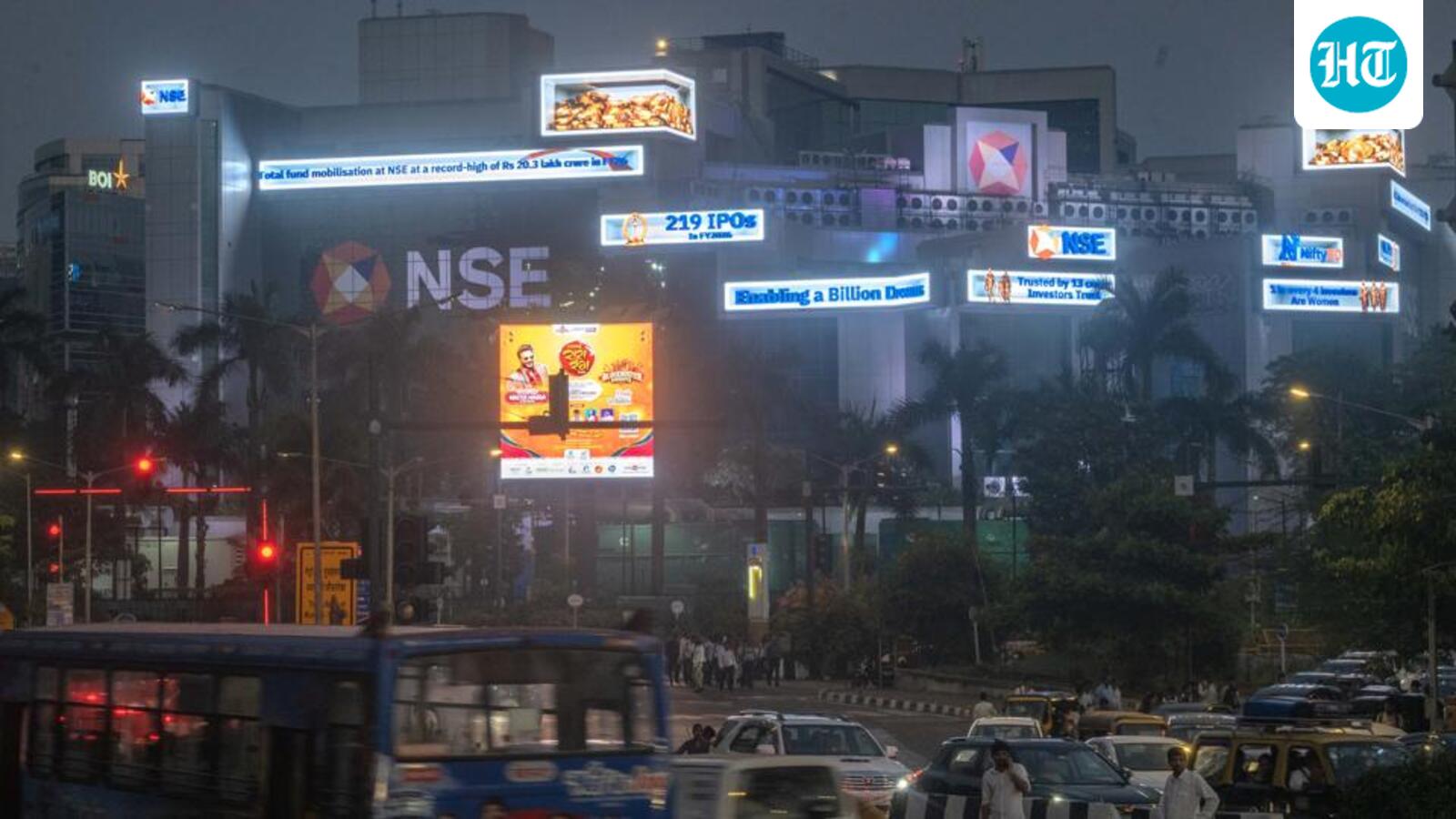
The Bombay High Court on Friday ordered the BMC to strictly follow a 1998 rule to switch off neon lights by 11 pm. The court heard a petition about light pollution in Mumbai and Thane. Officials must now file a reply before the next hearing scheduled for November 20.
MUMBAI: Ever squinted against the glare of a brightly lit billboard while driving through areas like the BKC at night? Or struggled to sleep as powerful floodlights continued to illuminate the surroundings long after dark? For residents dealing with the city's increasingly bright nights, the problem has now reached the Bombay High Court.
On Friday, the court directed the Brihanmumbai Municipal Corporation (BMC) to ensure strict compliance with a February 1998 order requiring neon lights to be switched off by 11 pm.
A division bench of Chief Justice Mahesh Chandra Tripathi and Justice Advait Sethna was hearing a petition alleging that authorities have failed to curb light pollution caused by high-intensity floodlights and illuminated billboards across Mumbai and Thane. The court directed the state government to file an affidavit in reply to the petition and posted the matter for further hearing on November 20.
The petition, filed by Nilesh Desai, an avid wildlife and astrophotographer, highlights what he describes as the growing problem of "light trespass" -- excessive artificial light spilling into surrounding spaces and affecting people who have no control over its source.
Desai has particularly flagged the increasing use of floodlights by gymkhanas along Marine Drive, which he says are often left on late into the night, causing considerable nuisance to residents and disturbing their sleep.
The concern, however, goes beyond an uncomfortable glare or a sleepless night. The petition argues that excessive artificial lighting can affect human health, disrupt animal behaviour and damage the natural environment. Bright lights against dark surroundings can force the eyes to work harder to adjust and may trigger headaches, migraines and visual fatigue.
"Excessive use of bright high-intensity lights results in disruption and disorientation of natural human and animal behaviour and causes visual discomfort," the petition states. It adds that excessive illumination also wastes energy, an increasingly important environmental concern, and disrupts ecosystems by altering the behaviour of animals and plants that depend on natural light cycles.
The petition further points out that choosing appropriate lighting solutions can save up to 60-70% of energy, helping conserve finite natural resources for future generations.
Desai claims that he has lodged over a hundred complaints with the police and the respective district collector's offices, seeking action against the use of high-intensity lights. Despite existing regulations governing noise and air pollution, he argues, there is no comparable framework to specifically address light pollution.
The consequences, the petition says, are not confined to residents living near brightly illuminated buildings or sports facilities. "These lights distract drivers, posing safety concerns, and negatively impact the health of surrounding residents," the petition, filed through advocate Ronita Bhattacharya Bector, states.
It also warns that prolonged exposure to light pollution, even at lower levels, can significantly harm people's health.
Drawing a parallel with the Noise Pollution Rules, the petition calls for a similar regulatory framework to define acceptable levels and timings for artificial lighting. Such rules, it argues, would help protect public health, preserve the natural environment and reduce energy wastage. It also seeks clear penalties for violations and a mechanism through which members of the public can register grievances, ensuring that the rules are effectively enforced.
Desai has suggested that high-intensity lights be switched off by 10 pm to mitigate the harmful effects of light pollution. He has also urged the court to direct state authorities to constitute a committee comprising senior officers to examine the issue.