
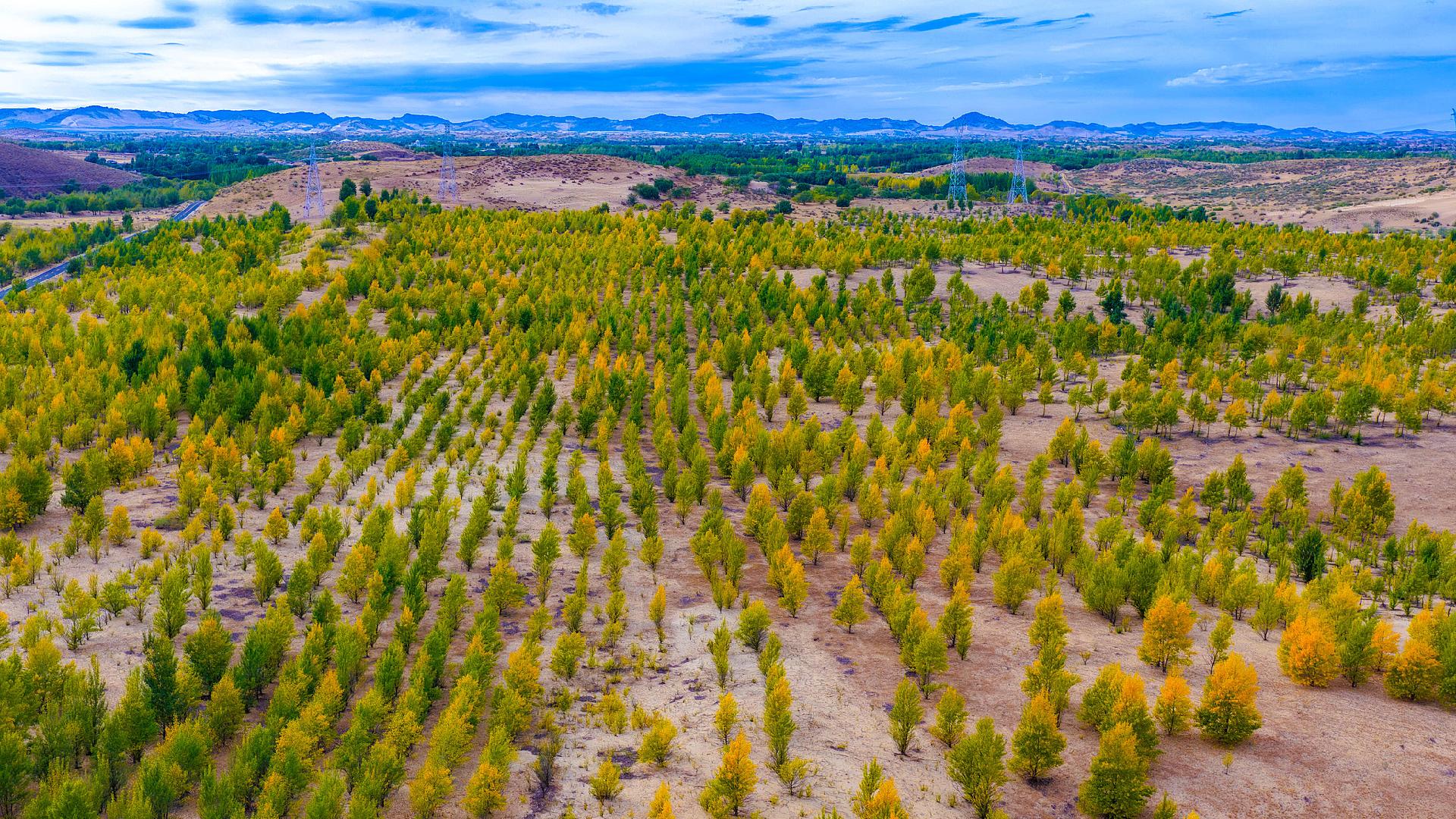
People in China are working to restore fragile ecosystems and build a greener future. New approaches turn barren land into green landscapes by using hybrid wheat and solar panels. These projects help save water and protect the soil. This green journey shows how technology and patience help the environment grow.
The Long March was a journey across mountains, rivers and deserts. Today, on a different kind of long journey, people in China are working to restore fragile ecosystems and build a greener future. From combating desertification to restoring ecosystems, new approaches are helping turn once-barren land into green landscapes.
In the country's desert regions, green development is also taking new forms. In some places, hybrid wheat is being grown on the edges of deserts after years of soil improvement and soil-and-water conservation. In others, photovoltaic projects are combined with sand control: solar panels generate clean energy while vegetation is restored beneath and between them. Water storage and replenishment facilities can collect rainwater and provide moisture to plants during dry periods, helping reduce reliance on groundwater in arid areas.
The journey toward a greener future is a long one, requiring patience, technology and generations of effort. As China continues to advance ecological conservation, a new "Long March" is taking shape - a "Green Long March" to restore ecosystems, protect the land and build a more sustainable future.