
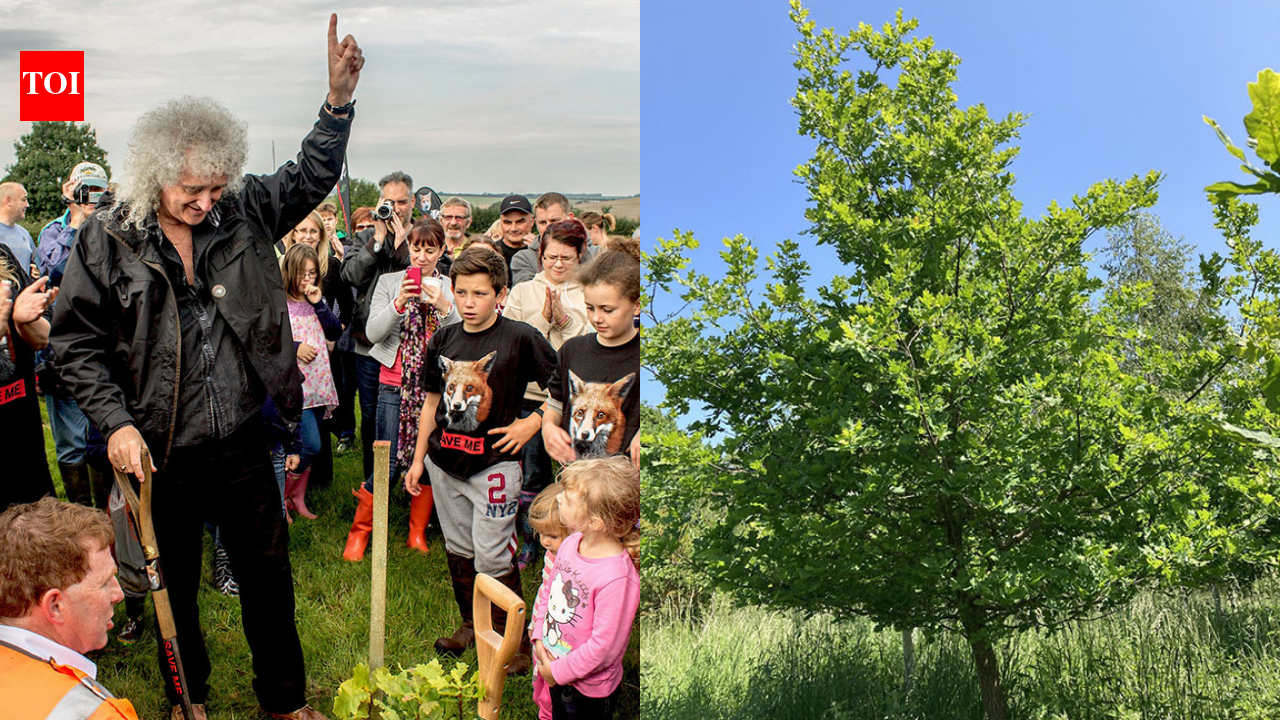
In September 2013, Brian May joined villagers to plant the first oak on 157 acres in Dorset. A decade later, 101,000 trees and shrubs had helped bring wildlife back to land previously used for growing crops. The project turned former farmland into a thriving woodland habitat for many local species.
What started with a single oak tree in a Dorset field has grown into a much bigger story about giving nature room to return. In September 2013, Brian May joined local villagers in Bere Regis to plant the first tree at what would become May's Wood, a 157-acre site that had previously been used for growing crops. According to Brian May's official website, the plan was to turn the farmland into a new woodland and wildlife habitat. Ten years later, more than 101,000 trees and shrubs had been planted, while wildflowers, insects, birds and small mammals had begun making the site their home.The first planting day took place on September 28, 2013, when May joined members of the local community at the site near Bere Regis in Dorset. The event marked the beginning of a project that was intended to change the character of the land over many years. At the time, the site was agricultural land, but the plan was to move it towards a very different future. May's Save Me charity was behind the project, with the aim of creating a woodland that could provide a permanent place for wildlife while also giving local people the chance to enjoy the landscape.The first community planting day was expected to see about 600 trees planted. Oaks were a major part of the planting, with young trees small enough for children and adults to handle. But the first few hundred trees were only the beginning. The longer-term plan was to plant more than 100,000 trees and shrubs across the 157 acres.May's Wood was never intended to be a landscape made up of rows of trees alone. The original plans included a mixture of woodland, shrubs, wildflower areas and open rides, giving different species a variety of places to live and feed. Alongside oak, the planting programme included beech, chestnut, lime, wild cherry, spruce, Douglas fir and walnut. Shrubs such as hazel, hawthorn, bird cherry, spindle and viburnum were also part of the plan.Wildflower areas were another important part of the project. Rather than covering every part of the former farmland with trees, some areas were to remain open and be managed as wildflower habitats. The woodland was also designed with paths and rides running through it, allowing people to move around the site while leaving plenty of space for wildlife. Deer fencing was planned for parts of the woodland as the young trees became established. In other words, the idea was to create a living landscape rather than simply plant as many trees as possible.A decade can make a remarkable difference to a young woodland, and the changes at May's Wood were becoming increasingly visible by 2023. According to Brian May's official website, the project reported that 101,000 trees and shrubs had been planted since the first community planting day. The site also contained large wildflower strips and clover-rich rides. Those changes had started to alter the wildlife found across the land. The 157 acres that had once been used for growing crops were now supporting insects, birds, wildflowers and small mammals. The return of different plants also created new food and shelter for insects and other species, helping the site develop into a more varied habitat.Among the wildflowers recorded at the woodland were bladder campion, knapweed and oxeye daisy, along with different grasses. These plants helped create suitable conditions for pollinators, including bees and butterflies. The transformation was not something that happened overnight. The trees first planted in 2013 were still young when the project began, and the surrounding habitat needed time to develop. But year by year, the landscape was becoming less like farmland and more like the woodland the project had originally imagined.The story of May's Wood was also documented through photographs. Photographer Linda Lamon attended the original community planting day and began recording the young trees. She continued returning to the site over the following years, photographing the changes as the woodland grew. According to Brian May's website, Lamon travelled from Stockport to Bere Regis several times a year to continue documenting the site. Her photographs provided a visual record of the transformation, from tiny newly planted saplings to a much more established young woodland.The photographs were later displayed as part of an exhibition at Bere Regis Village Hall in September and October 2023, marking ten years since the first community planting day. The exhibition offered a chance to look back at how much the landscape had changed since that first oak went into the ground.The significance of May's Wood lies in the fact that the project was never really about a single planting event. The first oak was simply the starting point. Over the following decade, more than 101,000 trees and shrubs were planted across the site, alongside wildflower strips and other habitats. As the vegetation developed, wildlife began returning to areas that had previously been used for crops. That gradual change is perhaps the most important part of the story. A woodland cannot be created in a day. Trees need years to grow, plants spread gradually and animals begin using a new habitat as it develops. By the tenth anniversary in 2023, May's Wood had moved a long way from the fields where the first community planting took place.What began with villagers gathering around a single oak had become a young woodland supporting a growing mix of plants and wildlife. For May and the people involved in the project, the hope was always that the land would become a lasting home for nature. A decade after that first tree was planted, the 157-acre site was already showing what that vision could look like.