
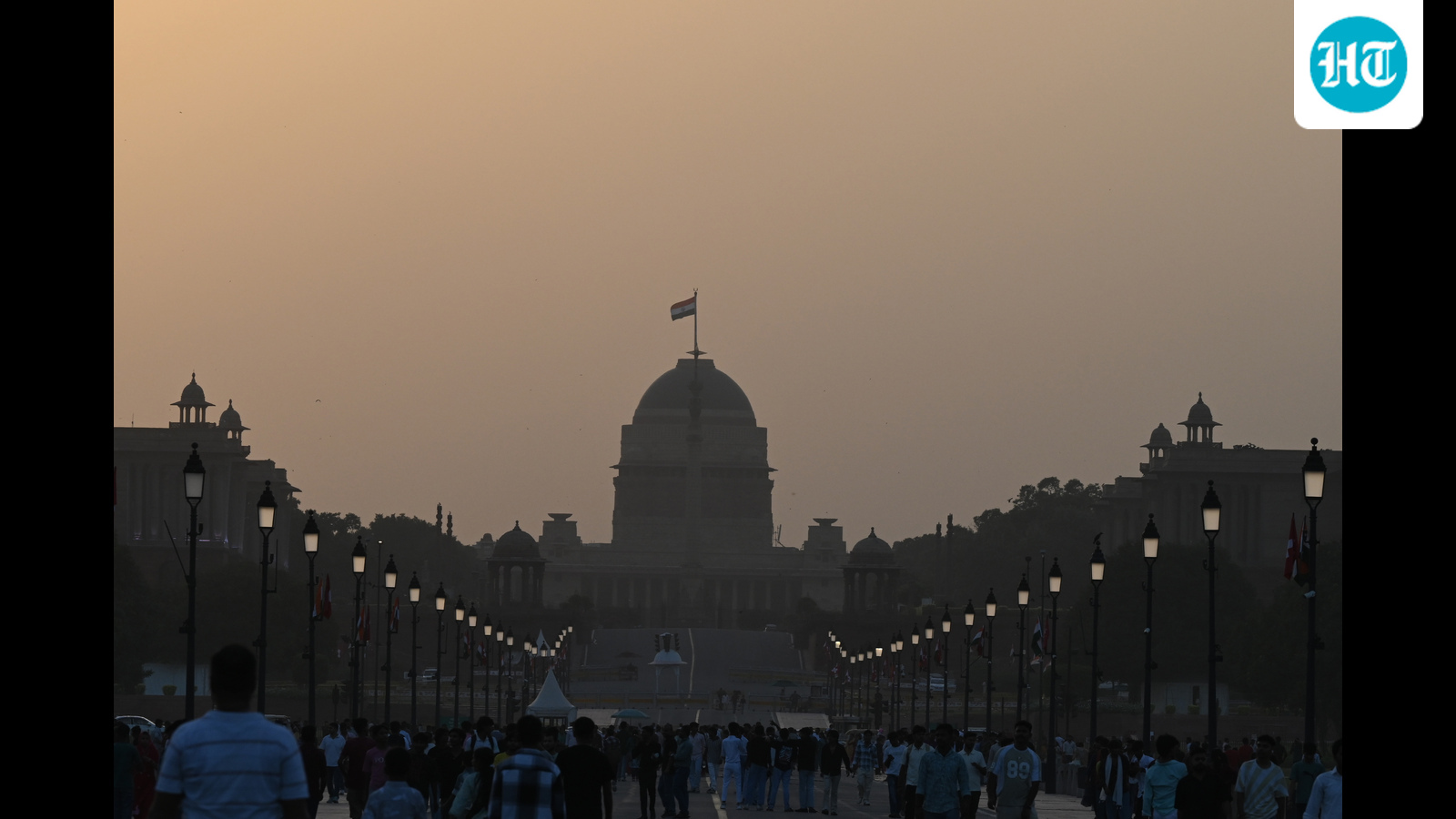
Delhi recorded its most polluted start to October since 2020 as air quality deteriorated for the fifth consecutive day on Sunday. Data showed an average AQI of 187, the worst in 82 days. Experts said, "Comprehensive emission load reductions across power plants, industrial units, waste management, and heavy transit are needed."
Air quality in the national capital continued to deteriorate for the fifth consecutive day on Sunday with the city logging its most polluted start to October since 2020, according to official data. This comes ahead of the city's most polluted season of the year when a toxic blanket of smog chokes the Capital.
According to Central Pollution Control Board (CPCB) 4pm data, the city recorded an average air quality index (AQI) of 187, firmly in the "moderate category". It marked the worst AQI in the past 82 days.
The city recorded an AQI of 171 on Saturday, 174 on Friday, 166 on Thursday, and 129 on Friday when air quality started worsening. PM10 -- largely comprises coarse, inhalable dust particles which may come from road dust, construction, or farm fires -- was found to be the dominant pollutant. This was on the back of five consecutive "satisfactory" air days as rain and high wind speed helped in dispersion of pollutants.
However, a lack of rain and localised emissions led to an increase in pollution levels. On Sunday, AQI was recorded at 197 (moderate) at 9am, reducing marginally as wind speeds picked up over the day.
Of the 43 active air quality monitoring stations in Delhi, 14 registered air quality in the "poor" category, as per the average 4pm bulletin. The highest AQI -- 273 (poor) -- was recorded at Mundka station, followed by 257 (poor) at both Mathura Road CRRI and Narela, and 237 (poor) at Jahangirpuri.
Jinitha Varghese, program manager at EnviroCatalysts explained, "Late-September rainfall provided a temporary washout that brought particulate levels down to clean baseline figures. However, as precipitation ceased following the official monsoon withdrawal, daytime temperatures surged while surface winds dropped significantly and flipped from moist easterlies to stagnant north-westerlies, trapping both local urban dust and incoming regional pollutants right at breathing level."
Varghese added that comprehensive, year-round emission load reductions are needed to achieve absolute reductions in the air shed. "While seasonal stubble burning and local dust drive immediate spikes, long-term relief requires targeting all structural pollution sources across the region. Comprehensive emission load reductions across power plants, industrial units, waste management, and heavy transit, alongside emergency dust and agricultural controls are the need of the hour."
According to CPCB standards, an AQI between zero and 50 is considered "good", 51 to 100 "satisfactory", 101 to 200 "moderate", 201 to 300 "poor", 301 to 400 "very poor", and 401 to 500 "severe".
CPCB data also showed that Delhi has recorded its most polluted start to October in the past six years. In comparison, the average AQI recorded on the first four days of October has been 174.5 in 2026; 119.75 in 2025; 167.25 in 2024; 155 in 2023, 161.25 in 2022; 107.25 in 2021 and 176.25 in 2020.
To be sure, air quality in Delhi-NCR starts worsening from mid-September, with stubble burning the usual precursor to winter pollution and subsequent fireworks during the festive season, especially around Diwali, worsening the situation despite curbs which are violated every year. CAQM's expert assessment has identified PM2.5 as the dominant pollutant affecting the Capital's air quality, with secondary particulates formed from emissions from transport, industries, power plants and biomass burning among the major contributors during winter.
Meanwhile, Delhi recorded a minimum temperature of 24.1 degrees Celsius (°C) on Sunday, and is likely to dip to 21-23°C over the week with partly cloudy sky to be observed Tuesday onwards, as per the India Meteorological Department (IMD).
The maximum temperature, meanwhile, was recorded at 36.4°C on Sunday.
Forecast by IMD suggests that Delhi is likely to see clear skies on Monday while there is a possibility of very light rain due to western disturbance on Tuesday.
Navdeep Dahiya, amateur meteorologist posted on X, "A series of mild western disturbances will begin from October 7 with chances of moderate western disturbance after October 20, which could bring precipitation in plains of north India and early snowfall over the western Himalayas. The next drop in temperature is expected after 10 October, with a minor dip in case of isolated rains during 7-8 October."
Rain could help improve the city's AQI for the time being.
CAQM flags 17 road dust, C&D waste violations
The Commission for Air Quality Management (CAQM) has flagged 17 violations related to visible road dust and accumulation of construction and demolition (C&D) waste during an inspection of 25 stretches covering around 35km of Delhi's Inner and Outer Ring Road on Saturday, officials said. The commission has directed the PWD and other concerned agencies to take appropriate corrective measures on a priority basis.