
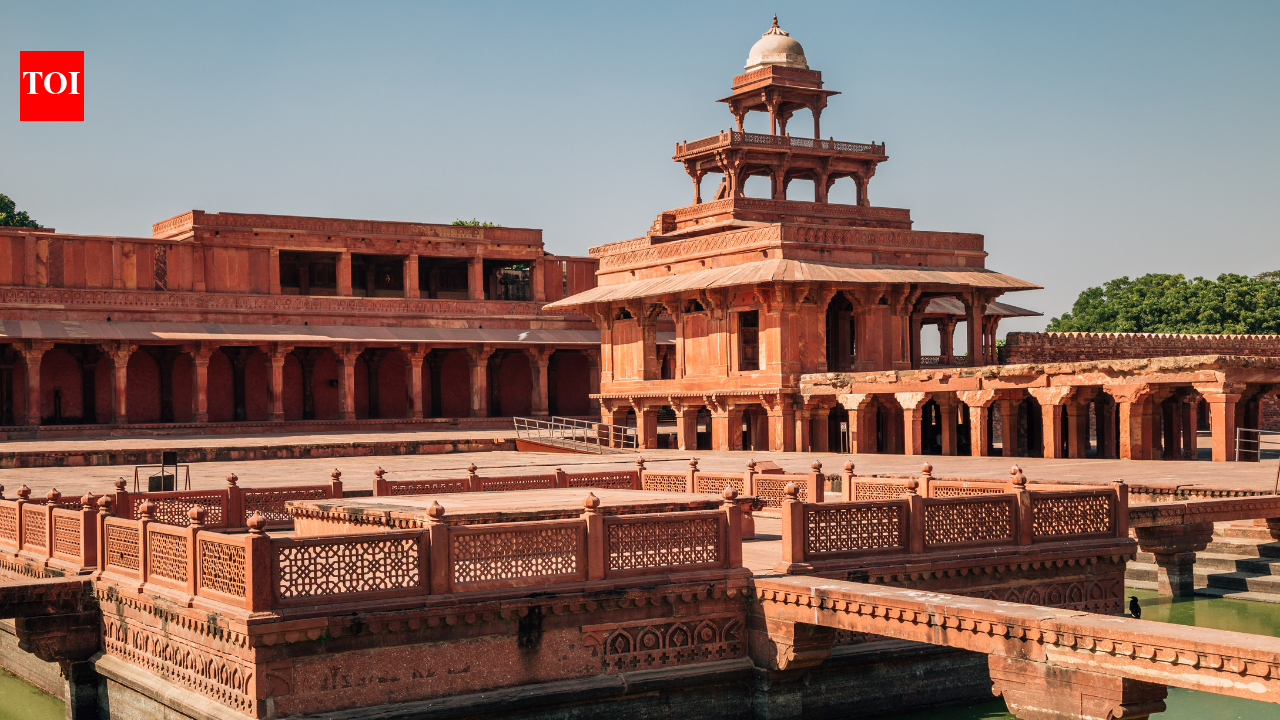
India is home to 45 UNESCO World Heritage Sites, but many remain less familiar to travellers. Beyond famous landmarks, sites like the Manas Wildlife Sanctuary, the Maratha Military Landscapes inscribed in 2025, the Ahom Moidams, and Chandigarh’s modernist architecture offer unique glimpses into the country’s diverse natural and cultural history.
India is a rich diverse land, home to 45 UNESCO World Heritage Sites. The sites span ancient cities, temples, forests, architectural landmarks and cultural landscapes. While the Taj Mahal, Jaipur and the monuments of Hampi regularly make it to travel lists, several other UNESCO sites remain comparatively less familiar.
(Canva)At the foothills of the Himalayas, Manas Wildlife Sanctuary stretches along the Manas River in Assam, close to the international border with Bhutan. It became a UNESCO World Heritage Site in 1985.The sanctuary combines grasslands, forests and riverine habitats, creating a home for an extraordinary variety of wildlife. It is particularly significant for housing threatened species, including the one-horned rhinoceros, tiger, wild water buffalo and pygmy hog. Unlike a conventional heritage itinerary, Manas is a reminder that India's UNESCO legacy also lies in its ecosystems and the wildlife they support.(Image Credit: UNESCO)One of the newer additions to India's UNESCO World Heritage list, the Maratha Military Landscapes of India was inscribed in 2025. The property comprises 12 fortifications, primarily located across Maharashtra, that together demonstrate the strategic military architecture developed by the Marathas between the 17th and 19th centuries.The forts were built around varied landscapes, from hills and plateaus to coastal areas, using their natural surroundings as part of their defence. Raigad, Shivneri, Pratapgad and Sindhudurg are among the better-known forts in the serial property, making this a heritage trail that doubles as a journey through Maharashtra's dramatic terrain.(Image Credits: DRONAH via UNESCO)Hidden among the landscapes of eastern Assam are the Moidams, monumental burial mounds associated with the Ahom dynasty. The Ahoms, who ruled Assam for nearly 600 years, buried their royalty and nobility in these earthen mounds. Beneath the distinctive domed structures are chambers containing the remains of the deceased and objects associated with them. This landscape is a monument to Ahom funerary traditions and beliefs about death.(Image Credit: Directorate of Archaeology, Government of Assam via UNESCO)Everyone reveres Chandigarh for its beautiful city planning. But did you know it is part of UNESCO's Architectural Work of Le Corbusier, a transnational World Heritage property spanning seven countries and 17 sites, honouring the contributions of Swiss-French architect Le Corbusier?Rather than ornate facades or centuries-old carvings, The Complexe du Capitole represents modernist architecture through its monumental concrete structures, geometric forms and relationship with light and space. The Palace of Assembly, Secretariat and High Court form part of the complex. It offers a fascinating detour for travellers interested in architecture, design and the story of how modern Chandigarh came about.(Image Credits: Canva)Perched on a hill around 40 km from Bhopal, Sanchi is home to one of India's oldest surviving Buddhist sanctuaries. Inscribed as a UNESCO World Heritage Site in 1989, the complex includes stupas, temples, monasteries and monolithic pillars, with some monuments dating back to the 3rd century BCE. Its most recognisable structure, Stupa 1, was expanded over several centuries and is known for its four intricately carved gateways depicting Buddhist stories and symbolism. Sanchi was an important centre of Buddhism until the 12th century and remains a pilgrimage site today.(Image Credit: Canva)Everyone highlights the beauty of South Bombay's architecture, but a few understand what it represents: how Mumbai's architecture tells the story of several eras at once. Recognising this, UNESCO inscribed the
Victorian Gothic and Art Deco Ensembles of Mumbai
in 2018.The World Heritage site encompasses a collection of historic buildings around the Oval Maidan, where Victorian Gothic structures stand alongside the later Art Deco buildings of the 20th century. The contrast is part of what makes the area so distinctive. Look closely and you will find pointed arches and elaborate ornamentation on one side, and streamlined curves, geometric detailing and stylised façades on the other.(Image Credits: Canva)With the world's third-highest mountain, Mount Khangchendzonga, at its heart, this Sikkim national park is as much a cultural landscape as it is a natural one. UNESCO inscribed Khangchendzonga National Park in 2016, making it India's first mixed World Heritage Site.The park encompasses glaciers, valleys, lakes, forests and snow-covered mountains. But its importance has no geographic limits. It is deeply interwoven with the religious and cultural practices of Sikkim's indigenous communities, especially in the sacred significance ascribed to Mount Khangchendzonga. Here, nature and belief are difficult to separate.(Image Credits: FEWMD via UNESCO)Intricate stone carvings, star-shaped plans and temples covered in seemingly endless sculptural detail make the Sacred Ensembles of the Hoysalas a fascinating stop for architecture lovers. It was inscribed by UNESCO in 2023. The property comprises three temples: Chennakeshava Temple at Belur, Hoysaleswara Temple at Halebidu and Keshava Temple at Somanathapura.They were built during the Hoysala period, and have detailed sculptures depicting deities, animals, dancers, and also, scenes from everyday life. Together they represent the artistic and architectural legacy of the Hoysala dynasty. (Image Credits: Canva)The Rudreshwara Temple or more popularly known as Ramappa Temple is located at the center of Telangana's Palampet village. It was constructed in the 13th century during the Kakatiya period, and was inscribed as a UNESCO World Heritage Site in 2021. The temple is dedicated to Lord Shiva, and is particularly notable for its intricate carvings, decorative pillars and distinctive architectural techniques. Its construction also reflects the Kakatiyas' mastery of stonework and temple design. Away from Telangana's better-known cities, Ramappa offers a chance to see an important chapter of the region's history in a remarkably preserved setting.(Image Credit: Canva)Thousands of years before India's modern cities developed their elaborate urban infrastructure, Dholavira was already a remarkably planned settlement. Located on Khadir island in Gujarat's Rann of Kutch, the ancient city was one of the major urban centres of the Harappan Civilisation.Inscribed as a UNESCO World Heritage Site in 2021, Dholavira reveals an advanced understanding of urban planning, water management, drainage and architecture. Its reservoirs, fortifications and organised streets offer a glimpse into how people lived in the Indus Valley Civilisation more than 4,000 years ago. For history lovers, few Indian destinations offer quite the same sense of travelling back in time.(Image Credit: ASI via UNESCO)