
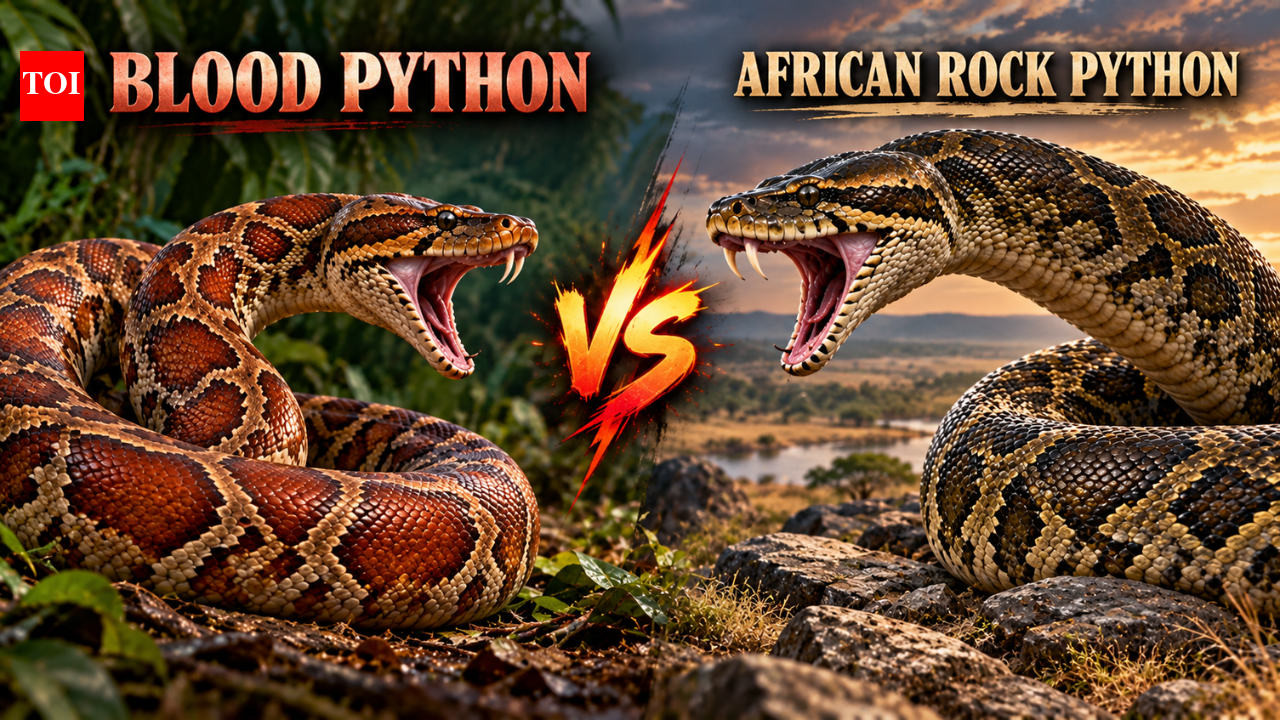
ബ്ലഡ് പൈത്തണും ആഫ്രിക്കൻ റോക്ക് പൈത്തണും തമ്മിലുള്ള പ്രധാന വ്യത്യാസങ്ങൾ ഈ റിപ്പോർട്ട് വ്യക്തമാക്കുന്നു. തെക്കുകിഴക്കൻ ഏഷ്യയിൽ കാണപ്പെടുന്ന ബ്ലഡ് പൈത്തണുകൾ താരതമ്യേന ചെറിയവയാണ്. എന്നാൽ ആഫ്രിക്കൻ റോക്ക് പൈത്തണുകൾ വലിപ്പത്തിലും വേട്ടയാടൽ രീതിയിലും ഏറെ മുന്നിലാണ്. ഇവയുടെ ആവാസവ്യവസ്ഥ, ഭക്ഷണരീതി, വലിപ്പം എന്നിവയെക്കുറിച്ചുള്ള സമഗ്രമായ താരതമ്യ പഠനമാണിത്.
Blood pythons and African rock pythons are two non-venomous constrictor snakes with distinct physical characteristics, habitats and feeding habits. The blood python (Python brongersmai) is native to Southeast Asia and is recognised by its thick, muscular body and deep red and brown colouration. The African rock python (Python sebae), native to sub-Saharan Africa, is Africa's largest snake, according to the US Geological Survey. While both species kill their prey through constriction, they differ in adult length, diet and geographical distribution. Comparing their size, appearance, hunting behaviour and conservation status highlights the key differences between these two python species.
Blood python vs African rock python: Size, diet and habitat compared
ParameterBlood PythonAfrican Rock PythonScientific namePython brongersmaiPython sebaeFamilyPythonidaePythonidaeNative rangePeninsular Malaysia, Sumatra and ThailandTropical sub-Saharan AfricaTypical adult lengthMales: 91-152 cm; females: 120-180 cmAdults: 3-3.53 metresMaximum reported lengthSome individuals recorded at 240 cmUnusually large specimens may exceed 4.8 metresBody appearanceThick, muscular body with deep red and brown colourationThick body with brown, olive, chestnut and yellow markingsHabitatTropical lowland forests, marshes and agricultural edgesForests, savannas, grasslands, semidesert and rocky areasDietSmall mammals and birdsSmall antelopes, hyraxes, monkeys, waterbirds, monitor lizards and crocodilesHunting methodAmbush predationConstrictionReproductionEgg-laying; up to 30 eggs reportedEgg-laying; 20-100 eggs reportedConservation statusLeast Concern, according to the supplied Burpee Museum accountNear Threatened, according to the supplied species accountMain threatsHabitat clearance and skin tradeHunting, leather trade and habitat destruction
Understanding the differences between a Blood python and an African rock python
1. Size: Blood Python vs African Rock PythonThe blood python is a heavy-bodied snake with a relatively short adult length. According to the supplied Python brongersmai species account, adult males typically measure 91-152 cm, while females usually reach 120-180 cm. Some individuals have been recorded at 240 cm. Hatchlings measure between 25 and 43 cm in total length.The African rock python is substantially longer in its reported adult measurements. The supplied Python sebae account states that adults commonly measure 3-3.53 metres, with unusually large specimens potentially exceeding 4.8 metres.
Reports of specimens exceeding six metres are also mentioned, although the account notes that larger specimens have not been confirmed. These documented measurements establish that the African rock python has the greatest reported adult length.
2. Appearance and Body StructureThe blood python is recognised by its deep red and brown colouration and thick, muscular body. According to the Burpee Museum of Natural History, its striking colour pattern and robust build distinguish it from other snakes in the museum's collection. The supplied species account also describes colour variations ranging from bright red and orange to rusty red, with yellow and tan markings along the body.The African rock python has a thick body covered with coloured blotches that may form a broad, irregular stripe. The supplied Python sebae account describes markings in brown, olive, chestnut and yellow, with the underside fading to white. Its head is triangular, with a dark brown marking outlined in buffy yellow. These features distinguish its appearance from the predominantly red-toned colouration associated with the blood python.3. Habitat and Geographical DistributionThe blood python is native to Southeast Asia. Burpee Museum of Natural History lists Peninsular Malaysia, Sumatra and Thailand as its native range, with tropical lowland forests, marshes and agricultural edges among its habitats. The supplied species account also identifies tropical swamps and marshes as preferred natural environments.The African rock python occurs across much of tropical sub-Saharan Africa, from western and central Africa towards Ethiopia and Somalia, and southwards to northern Angola and northern Tanzania, according to the supplied Python sebae account. Its habitats include forests, savannas, grasslands, semidesert and rocky areas. The account also notes its association with permanent water sources, including swamps, lakes and rivers.4. Diet and Hunting BehaviourThe blood python is an ambush predator that feeds on small mammals and birds. According to the Burpee Museum of Natural History, it uses visual and heat cues when hunting and often hides in dense vegetation. Its preference for warm, humid environments is also described in the museum's account.The African rock python kills prey by constriction. The supplied Python sebae account identifies small antelopes, hyraxes and monkeys among its principal prey, while waterbirds, monitor lizards and crocodiles are also recorded in its diet. The USGS likewise states that African rock pythons can eat goats, warthogs and crocodiles. These sources document a broader range of prey, including larger animals, for the African rock python.5. Reproduction and Egg-LayingBlood pythons reproduce by laying eggs. According to the supplied Python brongersmai account, females can lay up to 30 eggs and coil around them while shivering their bodies to produce heat for incubation. The account describes this behaviour as part of the species' reproductive process.African rock pythons also lay eggs, but the supplied Python sebae account reports clutches of between 20 and 100 eggs. Eggs may be laid in old animal burrows, termite mounds or caves. The female coils around the eggs to protect them and may help incubate them; the account states that hatching occurs after approximately 90 days. It also describes females guarding hatchlings for up to two weeks after they emerge.6. Conservation Status and ThreatsThe supplied Burpee Museum of Natural History account identifies the blood python as Least Concern on the IUCN Red List. However, it also notes that habitat clearance and the skin trade affect populations. The museum highlights ethical animal sourcing and sustainable captive-breeding practices in its discussion of the resident specimen.The African rock python is listed as Near Threatened in the supplied species account. Its documented threats include hunting for leather, collection for the pet trade and habitat destruction. International trade in the species is regulated under Appendix II of the Convention on International Trade in Endangered Species (CITES). These conservation descriptions reflect the supplied sources rather than a new assessment of either species.
Blood python vs African rock python: Clash of two non-venomous giants
In a hypothetical clash between a blood python and an African rock python, the African rock python would have a size advantage based on the reported adult measurements. It is Africa's largest snake and is documented feeding on large prey, including crocodiles, while the blood python typically feeds on small mammals and birds. However, both species are non-venomous constrictors, and the supplied sources do not document a confrontation between them. Their actual behaviour and the outcome of an encounter cannot therefore be determined from the available information alone.