
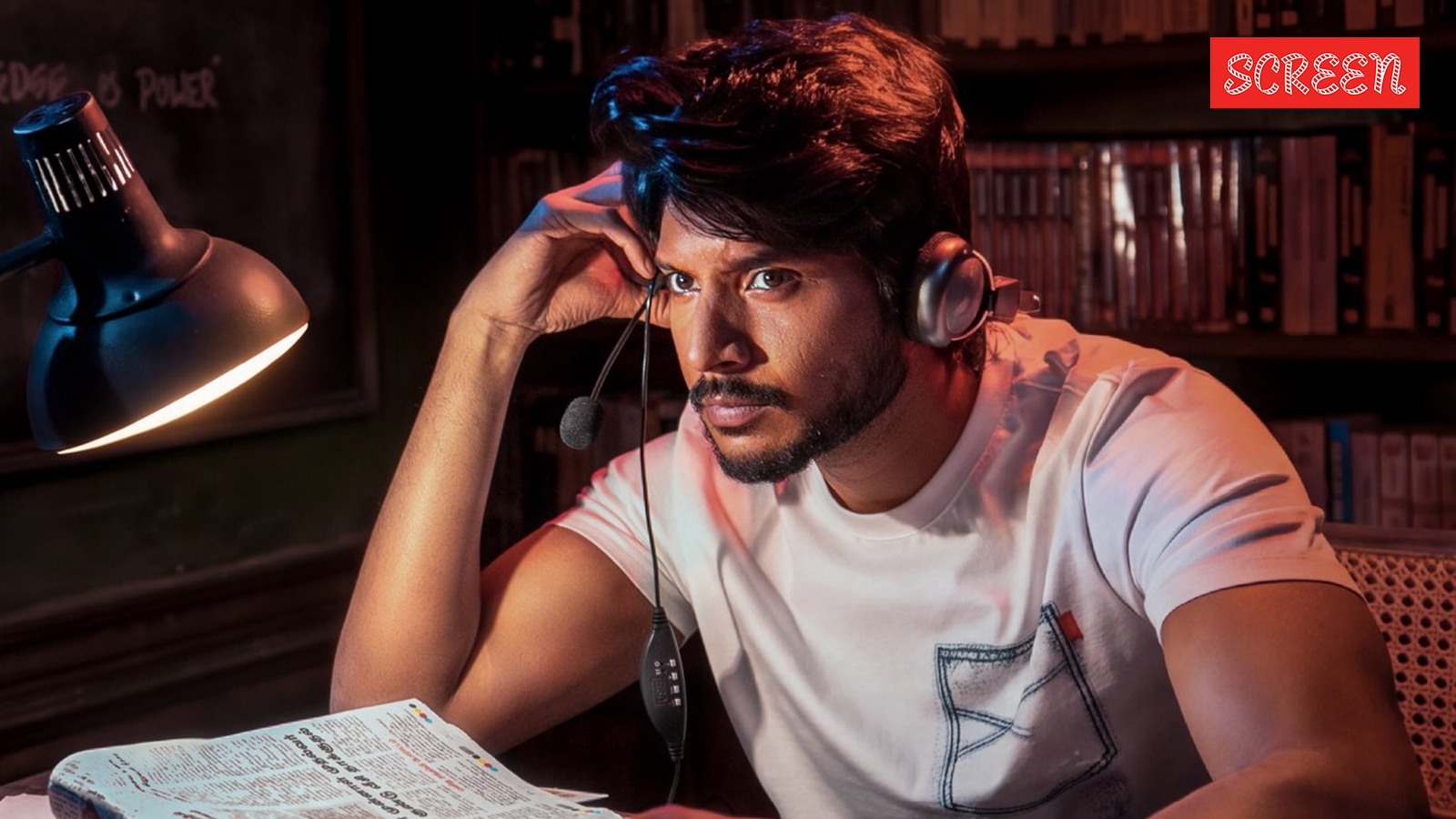
Jason Sanjay’s debut film Sigma features a promising heist plot but lacks a strong script. Sundeep Kishan plays Guru, a man who plans to steal from a syndicate boss. While Kishan brings great energy and sharp timing to his role, the weak screenplay fails to keep the audience’s attention throughout.
Sigma movie review and rating: Every heist film makes the same promise to the audience: We are going to show you something you have not seen before. A vault nobody can crack, and a team nobody would bet on. A plan so absurd it should not work. On paper, Jason Sanjay's Sigma has every ingredient of a heist film that should work. However, the heist itself, the reason the audience bought the ticket, unfolds with the urgency of a PowerPoint presentation rather than the adrenaline of a robbery. Sigma is a heist film that forgets to steal your attention.
Sigma follows Guru, played by Sundeep Kishan, a treasure hunter and radio host whose life falls apart after a betrayal strips him of everything. He is left with debts and a deep personal loss tied to a library that holds memories of his late mother. He discovers the existence of a Rs 500 crore racket controlled by Kotlapadi Veeraiya Reddy, played by Sampath Raj, a ruthless syndicate boss who operates across borders. Rather than confronting Reddy directly, Guru assembles a ragtag crew and plans an elaborate heist to steal the money from under the syndicate's nose.
Sundeep Kishan is the single best thing about Sigma. He carries the film through its weakest stretches with an energy and screen presence that keeps you watching even when the plot gives you reasons to stop. His comic timing is sharp. His physicality in the action sequences is committed. And his chemistry with the ensemble, particularly Raju Sundaram, provides the film's most watchable moments.
The problem is that the character of Guru is written without depth. He is charming but never complex. He is wronged but never vulnerable in a way that makes you feel his pain. Sundeep does what he can with what he is given.
Faria Abdullah, in her first Tamil film, is pleasant but underutilised. Her character Sam exists primarily as a romantic interest rather than an active participant in the heist, which is a missed opportunity given her natural screen presence. Sampath Raj as the villain is serviceable but generic. Raju Sundaram's comedy works in isolated bursts. Shiv Panditt, Anbu Thasan and Yog Japee are functional members of the ensemble but none are given enough material to leave a lasting impression.
The core problem with Sigma is that the screenplay does not understand the mechanics of the genre it is operating in. A heist film is, at its heart, a clockwork mechanism. Every complication turns the gears in a new direction. And the pleasure for the audience is watching the mechanism work, watching the gears interlock, watching the plan adapt in real time to obstacles the characters did not anticipate.
Sigma does not build this mechanism. The plan is presented but not stress-tested; the complications are introduced but not explored. The characters are assembled but not differentiated enough for their individual skills to matter during the execution. When every member of the heist crew is interchangeable, the audience has no reason to worry about who fails or who succeeds.
The emotional foundation is equally thin. Guru's motivation, avenging a personal loss and saving a library connected to his mother, is established in the first act but never deepened. The audience understands why he is doing this. They never feel why he is doing this. The difference between understanding and feeling is the difference between a heist film you watch and a heist film you experience. Sigma stays on the wrong side of that line for most of its runtime.
Krishnan Vasant's cinematography is the film's strongest technical element. The film looks expensive. S Thaman's music is the film's biggest technical disappointment. In a heist-action film, the background score needs to drive the pace, building tension during the operation, easing it during comic beats, and punctuating key reveals with just the right emphasis. Thaman's score does none of this effectively.
Praveen KL's editing struggles with material that demands sharper cuts and tighter transitions. One of the film's biggest drawbacks is its rapid cutting, which often leaves the narrative feeling disorienting. Scenes do not transition into each other. A conversation in a room cuts to a flashback that cuts to a slow-motion action beat that cuts to a song that cuts to a comedic interlude, and none of these cuts follow a logic the audience can follow.
The effect is not stylish. While the appeal might be to please younger audience, the film is trippy, in the worst sense of the word. There are stretches in the second half where the screen feels like it is having a seizure: quick cuts stacked on top of quick cuts, zooms that serve no purpose, transitions that arrive before the previous scene has landed, and a general visual restlessness that mistakes speed for energy. Sigma's editing is, for long passages, exactly that: noise dressed up as pace.
The runtime, while not excessively long, feels stretched because the second half lacks the narrative density to justify its duration. Hariharasuthan's VFX work is competent, supporting the action sequences without distracting from them.
Sigma is a debut that demonstrates potential without fulfilling it. Jason Sanjay can frame a shot and work with actors. He can manage the logistics of a multi-location production. Yet, he cannot yet write a screenplay that sustains itself across two hours, and in cinema, particularly in the heist genre where plot mechanics are everything, that is the skill that matters most. But the flat execution of the heist, repetitive plotting, forced comedy and emotional void at the heart of the story leave Sigma as a film that promises an underdog tale but delivers an underdeveloped one.