
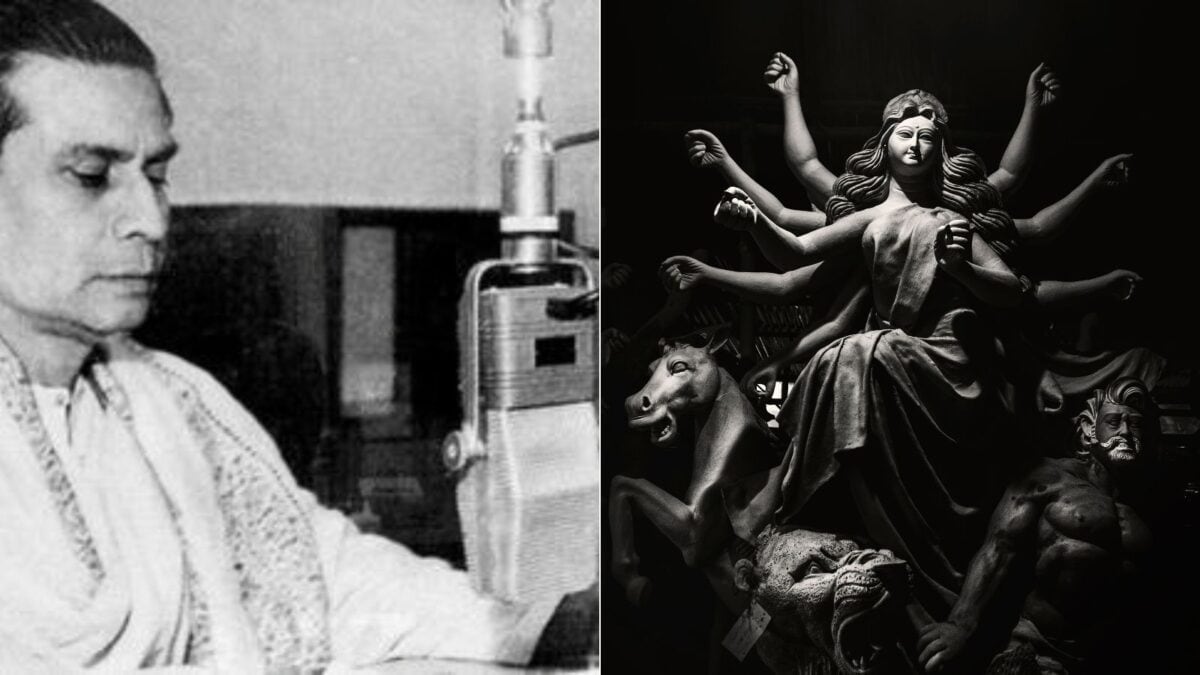
ഓരോ മഹാലയ ദിനത്തിലും ബംഗാളിന്റെ പ്രഭാതങ്ങളെ തന്റെ ശബ്ദം കൊണ്ട് ധന്യമാക്കുന്ന വീരേന്ദ്ര കൃഷ്ണ ഭദ്രയെക്കുറിച്ചുള്ള ലേഖനം. 1930-കളിൽ റേഡിയോയിലൂടെ തുടങ്ങിയ 'മഹിഷാസുരമർദ്ദിനി' എന്ന പരിപാടി ഇന്നും ബംഗാളികളുടെ ജീവിതത്തിന്റെ അവിഭാജ്യ ഘടകമാണ്. തലമുറകൾ കൈമാറി വരുന്ന ഈ ശബ്ദവിസ്മയം ദുർഗ്ഗാ പൂജയുടെ വരവറിയിക്കുന്ന ഒരു ആചാരമായി ഇന്നും തുടരുന്നു.
Every Mahalaya, Bengal wakes before sunrise to his voice. But who was Birendra Krishna Bhadra, the man behind the iconic Mahishasuramardini recitation?
At around 4 am on Mahalaya, when much of Bengal is still asleep, an unmistakable voice begins to fill homes. Once it came through transistor radios and crackling speakers; today, it arrives through phones, laptops and YouTube. The technology may have changed, but the voice remains the same.
That deep, commanding voice belongs to Birendra Krishna Bhadra, whose recitation of Mahishasuramardini has become inseparable from the Bengali experience of Mahalaya. For generations, his voice has been the unofficial alarm clock for Puja, signalling that the countdown to Durga Puja has begun.
For many Bengalis, the ritual is intensely personal. Even those living far from Bengal often return to the same recording each year. It is not simply something they listen to; it is a sound associated with childhood, family and the arrival of Puja.
The Radio Programme That Became A Ritual
The story of Mahishasuramardini began on radio in the early 1930s. Its earliest form was broadcast in 1932 as a dawn programme based on the story of Goddess Durga and her battle with Mahishasura. It later evolved and took the name Mahishasuramardini in 1937. Created around a combination of narration, Sanskrit verses, devotional songs and music, the programme brought together several major names of the era. Bani Kumar wrote the script, while Pankaj Kumar Mallick and Raichand Boral were associated with its music at different stages. Bhadra's narration and Chandipath, however, gave the programme its most recognisable identity.
In its early years, the programme was broadcast live. Bhadra would arrive at the radio station ahead of the broadcast and prepare for the Chandipath. Accounts of the programme's making describe how his distinctive way of reciting the verses eventually became central to the final sound of the broadcast.
Who Was Birendra Krishna Bhadra?
Born in 1905 in Ahiritola in North Kolkata, Bhadra was far more than the voice heard on Mahalaya morning. He was a broadcaster, playwright, actor, narrator and theatre personality, and spent much of his professional life associated with radio.
His interest in Sanskrit and performance began early. According to accounts of his childhood, Bhadra learnt Sanskrit from his grandmother and was already reciting Chandi at the age of eight. He was also known for his remarkable memory and ability to memorise long passages.
He joined the radio world in the late 1920s, initially balancing his work with other interests before becoming deeply involved with broadcasting. His repertoire extended to plays, adaptations, narration and a range of radio programmes. But none would define his legacy quite like Mahishasuramardini.
The Voice That Became Mahalaya
There is something distinctive about Bhadra's delivery. It is not simply a deep voice reciting Sanskrit verses. There is drama, urgency and rhythm in it, giving the story of Durga's battle with Mahishasura the scale of an epic unfolding before the listener.
That quality helped turn a radio production into a ritual. For Bengali families, Mahalaya morning became closely associated with waking before dawn and listening to Bhadra's Chandipath. The programme's soundscape -- the conch, music, devotional songs and Bhadra's narration -- became a familiar marker of the season.
Over time, the association became so strong that Bhadra and Mahalaya became almost interchangeable in popular memory. The fact that the recording has survived changing generations and technologies only strengthened that connection.
Even Uttam Kumar Could Not Replace Him
Perhaps the clearest indication of Bhadra's hold over the Bengali imagination came in 1976. All India Radio attempted to replace the familiar Mahishasuramardini broadcast with a new production, Durga Durgati Harini, featuring superstar Uttam Kumar as the narrator. Uttam Kumar was arguably the biggest name in Bengali cinema at the time, but even his star power could not replicate the emotional familiarity of Bhadra's voice. The replacement was met with a strong negative reaction from listeners, and the original Mahishasuramardini returned soon after.
The episode demonstrated something unusual about the programme: listeners were not merely attached to its story or music. They were attached to a particular sound, a particular voice and a ritual they had inherited from previous generations.
A Voice That Outlived The Man
Birendra Krishna Bhadra died on November 3, 1991, aged 86. But his voice never really left the homes that had welcomed it every Mahalaya.
Today, there is no need to wait for a radio broadcast. The recording can be streamed online and played on demand, allowing younger generations and Bengalis living outside India to participate in the same ritual. Yet the experience remains remarkably unchanged: wake before sunrise, press play and let Bhadra's voice announce the arrival of the festive season.