
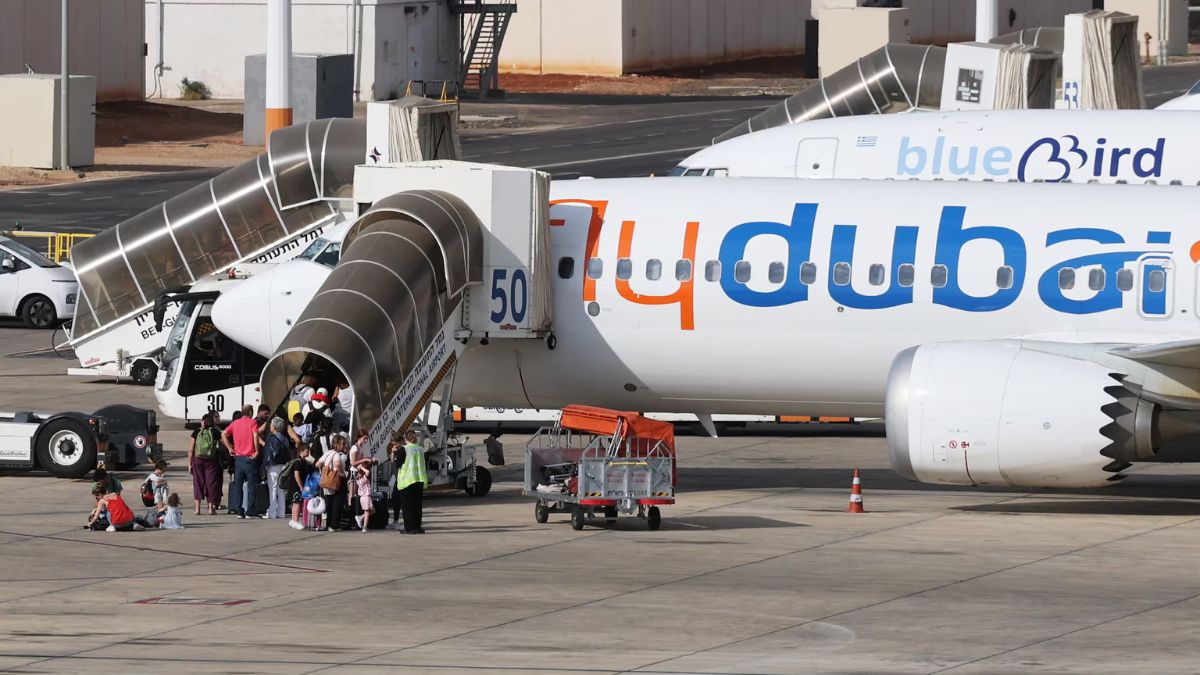
Two unnamed pilots travelling as passengers helped land flydubai FZ1073 safely after a cockpit attack. The flight dropped 16,625 feet in 30 seconds while flying over Saudi Arabia. Passenger Daniel Schlichter said, "In this case, they brought them because they should have brought the plane back from Tel Aviv to Dubai."
Three days after Flydubai flight FZ1073 dropped thousands of feet during an attack on its captain, attention is turning to two men who have not been publicly named: pilots who were travelling as passengers and went into the cockpit to stabilise the aircraft.
Flydubai has only described them as crew members travelling on the flight. The Associated Press reported that it was unclear why the airline had not identified them, while The National said flydubai declined to comment on the additional crew members.
Why were two extra pilots on the flight?
Passenger Daniel Schlichter, who was sitting in the second row, told the Associated Press that the two pilots were travelling on the flight because they were scheduled to operate the aircraft on its return journey from Tel Aviv to Dubai.
Airlines commonly move pilots as passengers when they need to reach another airport for their next assignment. This is known as "deadheading" and is formally called "positioning" crew in international aviation.
Schlichter described their presence on the flight as "one of the miracles", saying it was unusual for a flight to have two extra pilots travelling as passengers. "That is, not in every flight they bring two extra pilots. In this case, they brought them because they should have brought the plane back from Tel Aviv to Dubai, and this is the only reason they were there."
How did the two pilots take control?
Passengers heard screaming after the co-pilot began attacking Captain Smit Machchhar.Flydubai cockpit attack: Who were the two off-duty pilots who helped save FZ1073?
Despite being badly injured, Machchhar managed to unlock the cockpit door. A passenger then grabbed the co-pilot and pulled him out, while other passengers helped restrain him.
Schlichter said one of the pilots travelling as a passenger immediately moved through the people holding the attacker and reached the flight controls.
He began taking control of the aircraft. The second pilot then joined him. The two pilots closed the cockpit door behind them to prevent anyone else from entering.
The aircraft plunged more than 16,000 feet
The aircraft had been flying at around 34,000 feet when it suddenly began to lose altitude.
Reuters, citing Flightradar24 data, reported that the aircraft dropped about 16,625 feet in just over 30 seconds while flying over Saudi Arabia. The pilots needed several minutes to stabilise the aircraft.
The force of the descent was severe enough to damage and tear away part of the aircraft's rudder. The pilots then sent a Mayday call and began looking for an airport where they could land safely.
However, even after the two pilots had taken control, passengers did not immediately know what was happening inside the cockpit. The cockpit door remained closed, and the pilots did not speak to the cabin for about 45 minutes.
Schlichter said this made him worried that the aircraft could be diverted towards Iran or another location because the plane was not far from the region.
Eventually, the pilots announced that they would land in Tabuk, Saudi Arabia. They also told passengers that everything would be fine. Schlichter said he decided to trust them, and the landing proved him right. He described the first pilot who reached the controls as a hero and said passengers owed their lives to him, along with the other people who helped during the incident.
The aircraft landed at Tabuk airport in northwestern Saudi Arabia nearly four hours after leaving Dubai.
Flight-tracking data showed that the aircraft first transmitted a general emergency code. It then switched to a code indicating unlawful interference, which it kept for about an hour, before returning to the general emergency code.
UAE calls it an attempted terror attack
The UAE prosecutor general, Hamad Saif Al Shamsi, said on Saturday that investigators had found that the co-pilot attempted a "terrorist attack".
According to Al Shamsi, the co-pilot attacked the captain with a crash axe, an emergency tool normally kept inside the cockpit, and tried to take control of the aircraft.
The UAE is leading the investigation. Authorities said the findings, including the motive behind the attack, will be announced once the investigation is complete. The prosecutor general's comments were the first time Emirati investigators publicly described the incident as terrorism.
Anwar Gargash, a senior adviser to the UAE president, said on X that the UAE has zero tolerance for terrorism and would show no leniency towards extremist rhetoric.
Reuters, citing a source with direct knowledge of the matter and another source briefed on the investigation, identified the co-pilot as Hammam al-Hammami, an Omani national.
Neither the UAE authorities nor flydubai has publicly confirmed his identity.
What happened inside the cockpit?
Captain Machchhar, who is in his mid-30s and recovering in hospital, later described the attack to Netanyahu. He said the flight had started normally. At one point, the co-pilot asked to pray, which Machchhar said was not unusual among local passengers and crew.
Out of respect, Machchhar said he looked forward. Four or five minutes later, he felt a heavy blow to the back of his head.
At first, he thought the aircraft had suffered some kind of catastrophic damage. But as more blows followed, he realised that the person attacking him was the co-pilot sitting next to him.
His vision became blurred, and he tried to stop the attack. Machchhar recalled opening the cockpit door once, but believed the co-pilot closed it again. He then ended up lying on the cockpit floor.
He said he could hear a whooshing sound and people screaming. That was when he found "one last fight left in me", he told Netanyahu.
Machchhar said he knew he had to fight because otherwise he would die. He gathered whatever strength he had left, reached the door and opened it. People outside the cockpit were ready to rush in.
Netanyahu also relayed the account of an Israeli passenger who said the aircraft went into a spin. The passenger said another passenger and a crew member broke into the cockpit and overpowered the attacker while he was interfering with the aircraft's systems.