
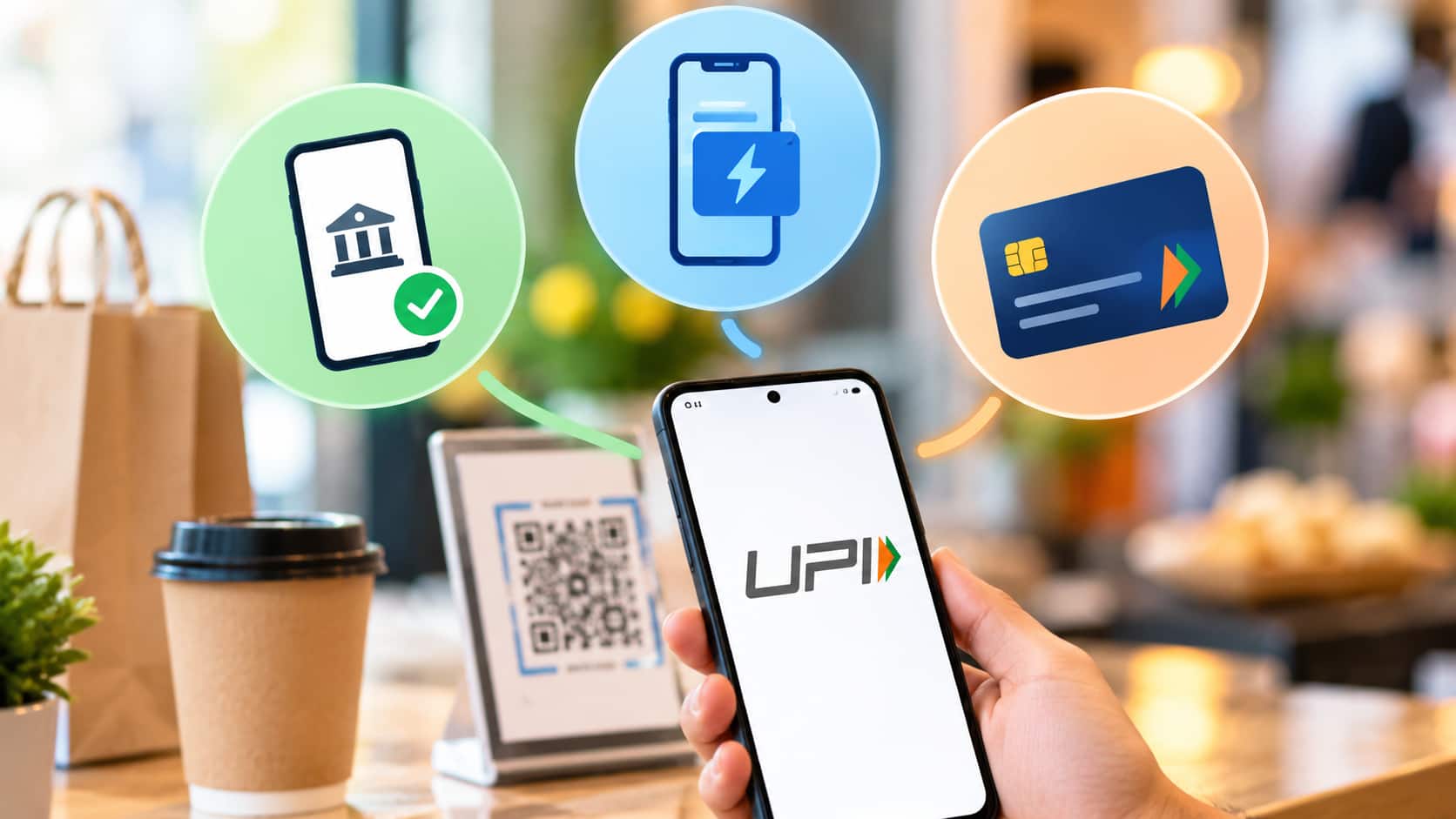
Users can now choose between regular UPI, UPI Lite, and RuPay credit cards for daily payments. Regular UPI pulls money directly from bank accounts. UPI Lite works well for small transactions without needing a PIN. Meanwhile, linking a RuPay credit card lets users pay merchants using their existing credit limit instead.
You can now pay for a cup of tea, a grocery bill or an online purchase without taking out your wallet. But there is a choice to make if your UPI app supports more than one payment method: use regular UPI from your bank account, keep a balance in UPI Lite, or link a RuPay credit card to UPI. The three options are not interchangeable. Regular UPI directly uses the linked bank account. UPI Lite is meant for smaller payments and works from money loaded into the Lite balance. Credit card on UPI lets eligible RuPay cardholders pay participating merchants using their credit limit. Regular UPI works for most bank payments For a normal UPI payment, the money comes directly from your bank account. You can scan a QR code, enter a UPI ID or use other payment options supported by your app. This makes regular UPI useful when you want the payment to come straight out of your account. It also works for sending money to another person, something that credit card on UPI generally does not cover. The downside is simple: every payment reduces the balance in your bank account. For someone trying to keep daily spending under control, seeing the account balance fall immediately can also be a useful check on spending. UPI Lite is meant for small payments UPI Lite is designed for small-value transactions. Instead of entering the UPI PIN for every eligible small payment, users can make payments from the amount kept in their UPI Lite balance, subject to the applicable limits and conditions. The original NPCI framework set the UPI Lite transaction limit at Rs. 200 and the balance limit at Rs. 2,000. These limits have since been revised, so users should check the current limit displayed by their bank or UPI app before relying on it. For someone making several small payments during the day, such as buying snacks, paying for local transport or making small shop payments, UPI Lite can be convenient. It also keeps these small transactions separate from the main bank-account payment flow. Credit card on UPI is different Linking a RuPay credit card to UPI gives you another way to pay participating merchants. Instead of money leaving your savings account immediately, the payment is charged to your credit card. That can be useful for people who already use a credit card and want to earn applicable rewards or get a little more time before paying the card bill. But it is still borrowed money. If the bill is not paid in full by the due date, interest and other applicable charges can make the purchase more expensive. NPCI says the transaction limit for a RuPay credit card linked to UPI is subject to the card issuer's credit limit, its UPI risk-management limit and any limit set by the customer. Which one should you use? For ordinary payments from your own money, regular UPI remains the straightforward option. UPI Lite makes more sense when you frequently make small payments and want a separate balance for them. Credit card on UPI can be useful for eligible merchant payments when you understand the card's billing cycle and intend to pay the bill on time. The important difference is where the money comes from. Regular UPI uses your bank balance, UPI Lite uses money set aside in its balance, while credit card on UPI uses your available credit. Choosing between them is therefore less about which method is "better" and more about which payment source fits the purchase and your spending habits. Disclaimer: The views and investment tips expressed by experts on Moneycontrol.com are their own and not those of the website or its management. Moneycontrol.com advises users to check with certified experts before taking any investment decisions.