
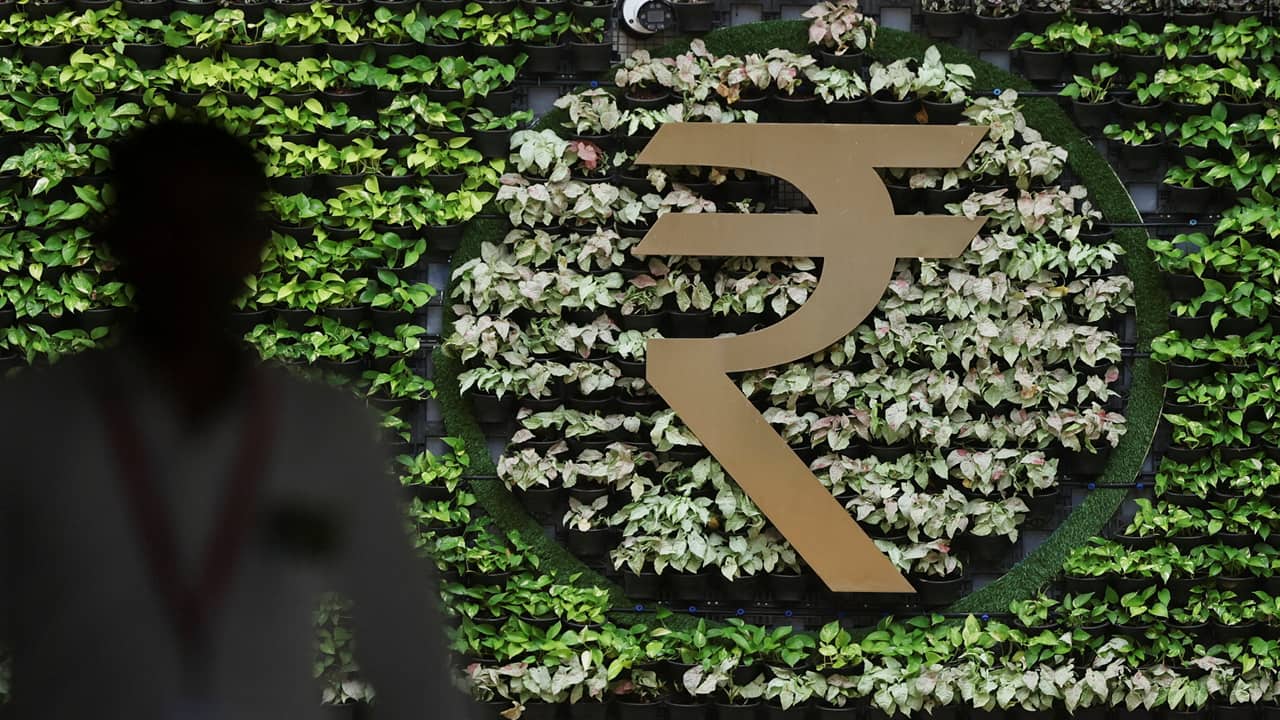
The Reserve Bank of India announced steps on Saturday to support the rupee against pressure from high oil prices. The central bank started measures to choke out short-sellers and artificial demand. These moves aim to protect the currency without hurting growth, though success depends on crude oil and FPI trends.
Market Mastery
Webinar by Vishal Malkan
Find the weak links
in your portfolio by Vishal Malkan
With the rupee continuing to be under pressure due to high oil prices and surging global bond yields, the Reserve Bank of India on Saturday announced a bunch of steps to choke out short-sellers, artificial demand, and excessive hedging. These steps are a determined effort by the central bank to stave off speculative attacks on the rupee without resorting to very high rates, which will hit growth. Here’s a summary of the key steps:
1. RBI has told oil companies to buy their dollar requirements from the central bank itself. This move will remove a huge demand for dollars from the market and can lead to a cooling off of the dollars
2. The RBI has told banks to set aside 20% of the nominal value of an importer's hedge into a foreign exchange risk reserve. Given the high cost of deposits, this rule to keep cash idle compulsorily will force banks to increase the cost of the hedge, thus discouraging companies from excessive hedging. However, this rule applies only to hedges above $2 million, so small importers may escape.
3. The RBI has capped currency derivative positions by all entities without any underlying to $5 million from the earlier limit of $100 million.
4. Companies have been forbidden to rebook cancelled forward contracts. Corporates often play the market to sell when premiums are high and buy when they are low. This speculative demand now ends.
So what may be the impact of these measures:
Bankers see the rupee rising to 95-95.50 against dollar on Monday itself or during the course of the week. The hope is that this may tempt exporters to sell their accumulated dollars; exporters have been holding back on hopes of the dollar rising versus the rupee.
Importantly, the 20% free cash requirement, which will push up premiums on forward dollars, applies only to current account transactions. That means it applies to importers, but doesn’t apply to FPIs who want to hedge the capital they are bringing in or to companies raising ECB or external commercial borrowings and wanting to hedge them. It also doesn’t apply to exporters.
This step, while helpful to avoid excessive hedging, can hurt genuine hedging. Hedges under $2 million are exempt, but steel, auto, chemical, electronics, and even textile companies have large imports which can now become expensive. Some importers may take the risk of remaining unhedged and can get badly hurt if premiums shoot up on the day of payment because of, say, crude oil prices surging.
RBI may argue, and rightly, that its steps will have collateral damage, but a stable rupee is ultimately good for the entire economy.
Some experts have argued that the RBI should have done a 50 bps rate hike in its October 7 policy or announced a CRR (or a cash reserve ratio) hike, which could have been a more powerful defence of the rupee.
Clearly, the central bank is doing its utmost to ensure it doesn’t have to raise rates aggressively and hurt growth; it is instead preferring to go after speculators and excessive hedging. However, the continued rise in US yields may require a strong interest rate defence.
Some experts have argued that the RBI ought to have been hawkish through 2025, when the rupee was falling sharply. They point out that the difference between US and Indian yields has been narrowing and is now at its historic low of just 200 basis points. Going back four decades, the difference has usually been around 400 basis points. The RBI cut rates by 125 basis points from January to December 2025 because India’s CPI inflation fell below 2% in FY26, versus the RBI’s mandate to keep CPI at 4% (+/- 2%).
Economists point out the 2% CPI represents goods used by the bottom 50-60 % of the population, which sends its children to government schools and colleges. The more well-off have been faced with surging education and health costs that are nowhere near the 2% calculated by the Central Statistical Organisation. The rupee is probably responding to the inflation faced by these categories and hence falling to adjust for the inflation difference.
Questioning the representativeness of the CPI basket may be tough for the RBI, which has to follow its given mandate of achieving 4% inflation (+/-2%). Also, throughout 2025, the growth sentiment in India was very weak given the aggressive tariff threat by the US president and government with its GST cuts, and the RBI with its rate cuts were understandably keen to support growth.
The current speculation-curbing steps may give the RBI and government a little more time to think through their defences of the rupee. Ultimately, foreign fund flows will come seeking growth, and the earnings growth of Indian companies is expected to come at a 7-quarter high of over 20% for the July-September quarter.
The expectation is that FPIs will come in also, given the historically low valuations at which Indian equities are trading. The government could well aid that process by removing the capital gains tax on FPI investment in Indian equities and corporate bonds. But there are few signs of that in Delhi.
If the AI trade continues, as the repeated recovery in US stocks shows, and if crude surges even higher, RBI may be forced to go for a mid-policy aggressive rate hike. One can only hope it doesn’t come to that.