
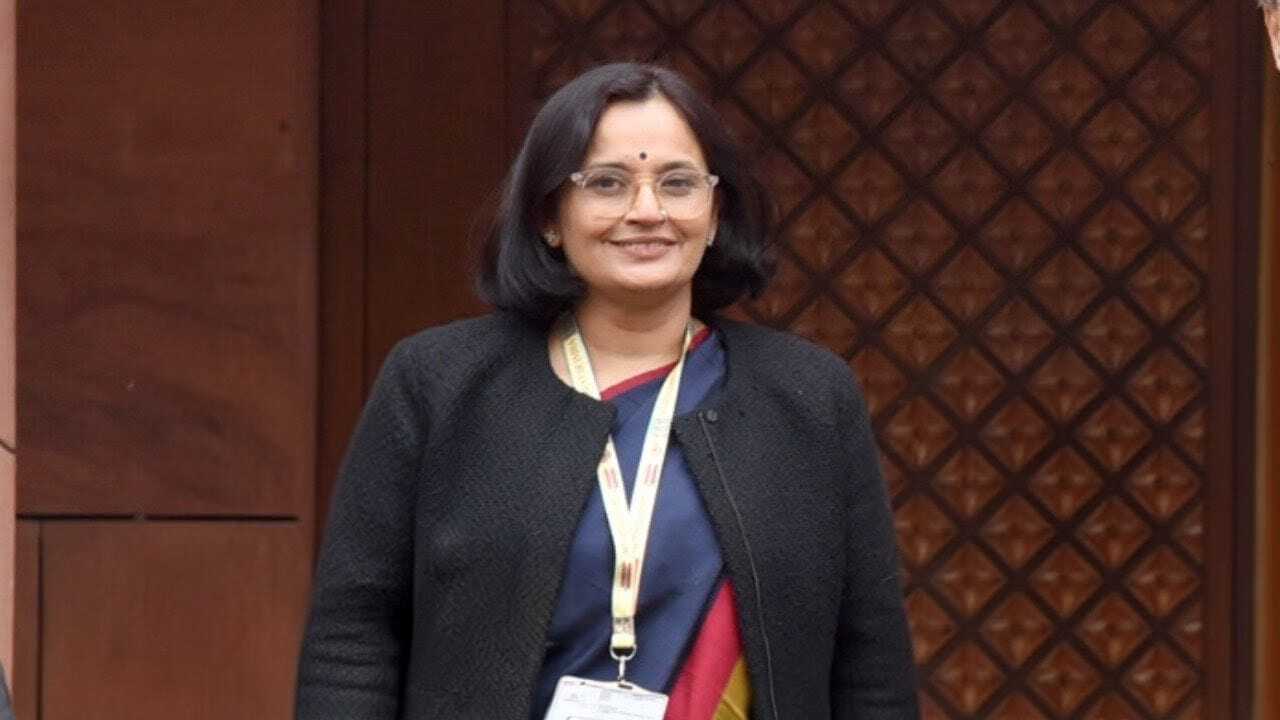
DEA Secretary Anuradha Thakur said on September 4 that private investment is finally picking up in India. "Private firms are committing to new projects led by power, data centre, and metals," she said. Banks are lending more to firms, and projects reached a record Rs 4.4 lakh crore in FY26.
We have seen with dismay that private investment is not picking up in the last couple of years, but now the results are beginning to show, Anuradha Thakur, Secretary, Department of Economic Affairs (DEA) said on September 4. "Private firms are committing to new projects led by power, data centre, and metals. And banks are lending more to industry, to large and medium firms, as well as to micro and small enterprises," the DEA Secretary said in her address at the Kautilya Economic Conclave 2026. The September RBI Bulletin said that India's resilient domestic fundamentals continue to provide a strong foundation for private capital expenditure. In FY26, the aggregate cost of projects (of private sector) sanctioned by the banks and financial institutions reached a record Rs 4.4 lakh crore, reflecting sustained confidence among corporates, the Bulletin said. "Infrastructure continued to dominate the investment landscape, led by the power sector." With regard to the projects sanctioned by the banks and FIs during 2025-26, 43.2 percent of the project cost was planned to be invested by the end of financial year 2025-26, 34.5 percent is provided for 2026-27 and the remaining 22.2 percent is envisaged to be invested in the subsequent years, the Bulletin said. The phasing profile of pipeline projects financed through all the three channels in the years preceding the reference year, suggests that the envisaged capex could increase substantially to Rs 3.2 lakh crore in 2026-27 as against comparable capex of Rs 2.6 lakh crore in 2025-26, indicating sustained momentum in private investment, it added. On public capex, Thakur said that it has risen from Rs 2 lakh crores in 2014-15 to a Budget of about Rs 12 lakh crores this year. "This budget, including grants to states for capital creation. Effective capital expenditure is Rs 17.15 lakh crore." "Apart from this, there have been targeted schemes to incentivize the private sector. We have the public-private partnership (PPP) space, where we give viability gap funding. Then we have this whole model of plug-and-play investment parks, which have become successful, diversified from semiconductors, electronics, textile parks to now chemical parks and now biopharma parks as well, which are showing results in attracting global capital and domestic capital, and the production-linked incentive schemes across various sectors, a couple of which have been extremely successful," Thakur added. Meanwhile, on gross FDI, Thakur said that India recorded around $30 billion inflows in Q1 of FY27. "What is interesting for us in India is that the sectoral pattern of flows shows that global capacity is not simply viewing India as a low-cost production base, but increasingly as a place to build capacity. And we feel confident, that this is a demonstration and a show of confidence in the fundamentals that India has demonstrated."