
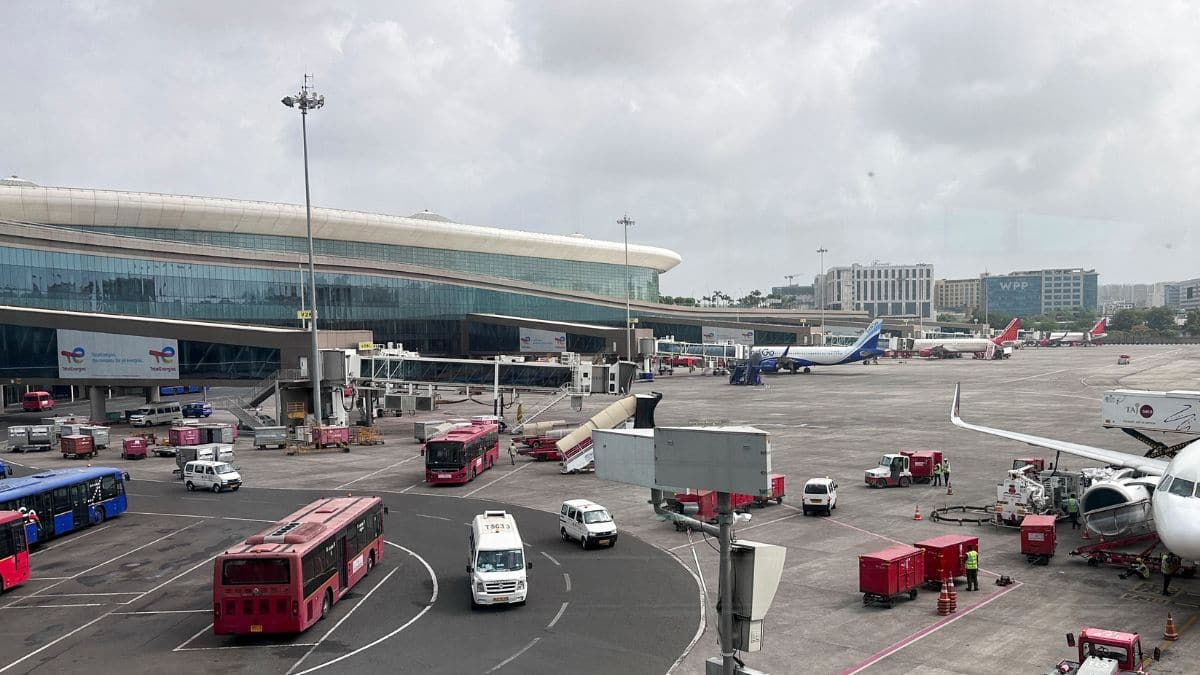
Mumbai airport’s Terminal 1 will close for flight operations from October 25 and remain shut until 2029-30 for redevelopment. MIAL said airlines currently operating from T1 can move flights to Navi Mumbai International Airport or temporarily suspend services. This major shift will affect many passengers as flights move to Terminal 2.
Mumbai airport's Terminal 1 will close for flight operations from October 25 and remain shut until 2029-30 for redevelopment. As flights shift to Terminal 2 and Navi Mumbai International Airport, passengers could face longer journeys and higher travel costs
Mumbai's Chhatrapati Shivaji Maharaj International Airport is set for a major reshuffle as Terminal 1 (T1) will stop handling flights from October 25, with the terminal expected to remain closed until 2029-30 for redevelopment.
Mumbai International Airport Limited (MIAL), which operates the airport, said airlines currently operating from T1 can move flights to Navi Mumbai International Airport (NMIA) or temporarily suspend services. The New Indian Express reported on September 30 that the redevelopment follows a directive from the Airports Economic Regulatory Authority of India (AERA).
The move will affect thousands of passengers as flights are redistributed between Mumbai's Terminal 2 (T2) and NMIA.
Why is Terminal 1 shutting?
The New Indian Express reported that it was an 84-year-old terminal. AERA had directed that the terminal be demolished, but the work was delayed because airlines did not have another airport facility to use.
MIAL said the redevelopment had originally been scheduled to start in mid-2025 but was postponed because there was no alternative operating facility.
With NMIA now operational, MIAL said airlines have another airport within the Mumbai Metropolitan Region. The airport operator has informed stakeholders that redevelopment work will begin in January 2027.
According to The Times of India, demolition of the north section of Terminal 1-B is scheduled to begin on January 15, 2027.
Where will the flights go?
The closure will lead to a phased redistribution of flights. The Times of India reported that at least one-third of international air traffic movements are planned to shift to NMIA from October 1. From October 25, at least one-third of T1's air traffic movements will be moved to T2.
Of the nearly 15 million passengers handled by T1 during the 2025-26 financial year, flights carrying around 10 million passengers are expected to shift to NMIA by the end of October. The remaining five million are expected to be accommodated at T2.
Mumbai airport currently handles around 950 flights a day. T1 handled nearly 15 million passengers in 2025-26, compared with around 40 million at T2.
MIAL is also discussing the movement of flights with domestic and international airlines. Akasa Air has already shifted some operations. Its domestic operations moved from T1 to T2 from August 1.
Some international flights currently operating from T2 could also move to NMIA.
What does this mean for passengers?
For flyers, the most immediate change will be the airport they need to travel to. Passengers whose flights move to NMIA will have to make longer road journeys, particularly those travelling from Mumbai. This could mean additional travel time and higher commuting costs, depending on where passengers begin their journey and how they travel.
The movement of passengers between Mumbai and Navi Mumbai will also put additional pressure on roads, especially during peak traffic hours.
Passengers will therefore need to check their flight details carefully before leaving for the airport, particularly during the transition period, as flights currently operating from Mumbai could move between T2 and NMIA.
Will the closure reduce congestion?
The redistribution could also ease congestion at Mumbai airport. At present, all flights landing at Mumbai airport use its single operational runway before passengers are taken to either T1 or T2. Moving part of the traffic to NMIA is expected to reduce congestion this winter.
According to The Times of India, this could cut aircraft holding time before landing and reduce waiting time for departures, potentially improving punctuality and on-time performance.
Most general aviation flights, including private and charter aircraft, are also expected to move to NMIA in the coming months.
What about airline slots?
MIAL has said the closure will be temporary and that airlines' existing slot rights will be restored once the new terminal becomes operational.
The New Indian Express quoted an MIAL spokesperson as saying that airlines' historic slot rights would be "honoured" once the new terminal opens. Slot rights give airlines permission to land or take off at particular times.
MIAL has also sought the creation of a joint transition group chaired by the civil aviation secretary to coordinate the changes and reduce inconvenience to passengers.
With T1 operations ending on October 25 and demolition scheduled to begin in January 2027, passengers will have to keep a close eye on their terminal and airport details as Mumbai's air traffic is redistributed over the coming years.