
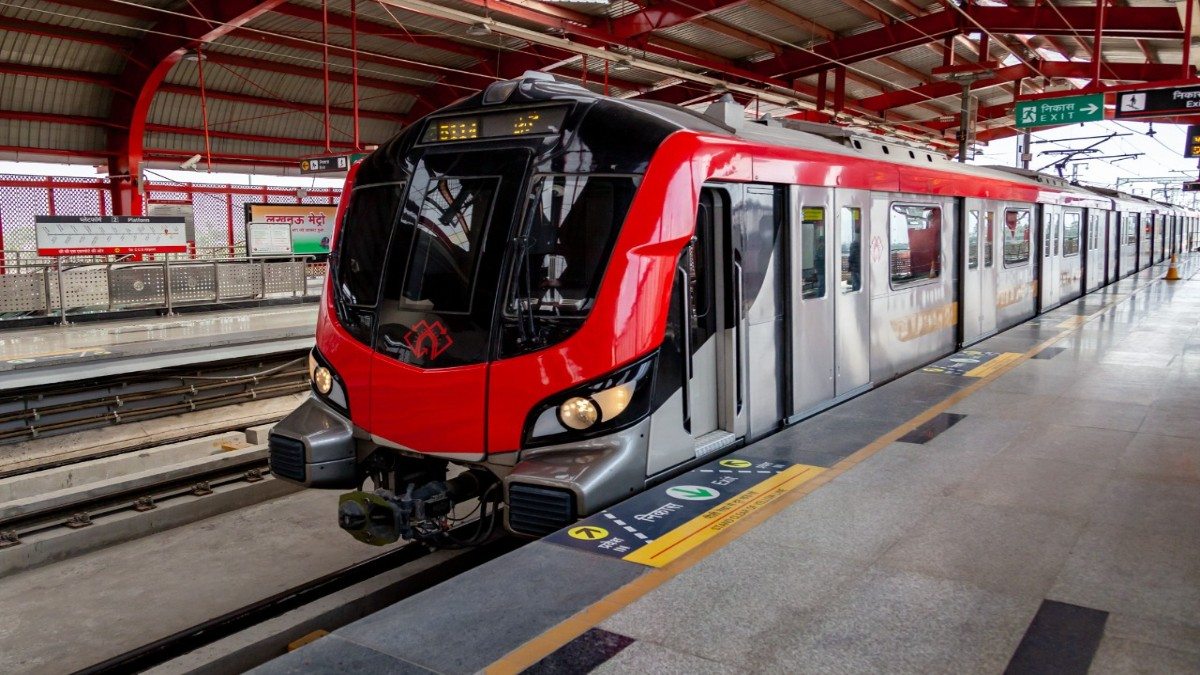
The Uttar Pradesh Metro Rail Corporation invited bids for electrical and mechanical work at seven underground stations under Lucknow Metro Phase 1B. The project, worth ₹326.81 crore, includes installing ventilation and power systems. The Union Cabinet approved this 11.165 km corridor in August 2025 to improve travel across busy city areas.
Lucknow Metro Phase 1B is moving ahead, with work progressing on the planned corridor that will connect several key areas of the city. The expansion is expected to improve metro access to busy markets, medical facilities, railway stations, and residential areas.
The new corridor will extend the existing metro network and provide commuters with another way to travel across Lucknow.
Here is a look at the latest developments and the work planned at seven underground stations.
Rs 327 cr work planned at seven stations
Work worth approximately ₹326.81 crore is planned at seven underground stations under Lucknow Metro Phase 1B.
The Uttar Pradesh Metro Rail Corporation (UPMRC) recently invited bids for the design, engineering, supply, installation, testing, and commissioning of electrical and mechanical systems at these stations.
The stations covered under the package are Charbagh, Gautam Buddha Nagar, Aminabad, Pandey Ganj, City Railway Station, Medical Chauraha and Chowk Chauraha.
The work includes diesel generator (DG) sets, environmental control systems, tunnel ventilation systems and building management systems, along with other electrical and mechanical installations. These systems will support the operation of the underground stations and their associated infrastructure.
How will the new systems support metro operations?
The planned installations cover several functions that are essential for running underground stations. Diesel generator sets will provide backup power, while environmental control systems will help maintain suitable conditions inside station buildings.
Tunnel ventilation systems are designed to manage airflow within underground sections. Building management systems will support the monitoring and control of various building services.
Together, these installations will form part of the infrastructure required to operate the seven stations. Their development will go alongside the construction of the underground corridor and other station facilities.
Lucknow Metro Phase 1B: Route, stations and coverage
Phase 1B will cover 11.165 km and include 12 stations, comprising seven underground and five elevated stations. The Union Cabinet approved the project in August 2025 at an estimated cost of ₹5,801 crore.
The corridor is planned to extend metro access to important parts of Lucknow, including neighbourhoods in Old Lucknow such as Aminabad, Yahiyaganj, Pandeyganj and Chowk. These areas have busy markets, commercial establishments and residential neighbourhoods that attract people throughout the day.
Once Phase 1B becomes operational, Lucknow's active metro network is expected to extend to around 34 km.
Work progresses on Charbagh-Chowk section
Another important development under Phase 1B is the underground construction section between Charbagh and Chowk.
Afcons Infrastructure recently emerged as the lowest bidder for a ₹1,383.30 crore contract covering the design and construction of approximately 6.70 km of underground metro infrastructure.
The contract is dated October 5, 2026, and has a completion period of 1,095 days. The work includes seven underground stations and associated civil construction.
The section will pass through densely developed parts of Lucknow and form a key part of the corridor.
The civil construction and the electrical and mechanical installations are separate packages that will contribute to the development of the underground stations.
Metro access planned for markets and medical facilities
The new corridor is expected to bring metro services closer to commercial areas such as Aminabad, Yahiyaganj, Pandeyganj and Chowk. Improved access could make these markets easier to reach for shoppers, workers and residents.
The planned route will also improve access to King George's Medical University and associated medical facilities around the corridor. Patients, attendants, students and healthcare staff could benefit from an additional public transport option once the line becomes operational.
What commuters can expect from Phase 1B
The expansion is expected to extend Lucknow's metro network to more parts of the city, giving commuters another option for daily travel. Once operational, the corridor will add to the existing network and could help reduce dependence on road-based transport for some journeys.
The new line will also strengthen the city's public transport network by connecting with existing metro services and railway facilities.