
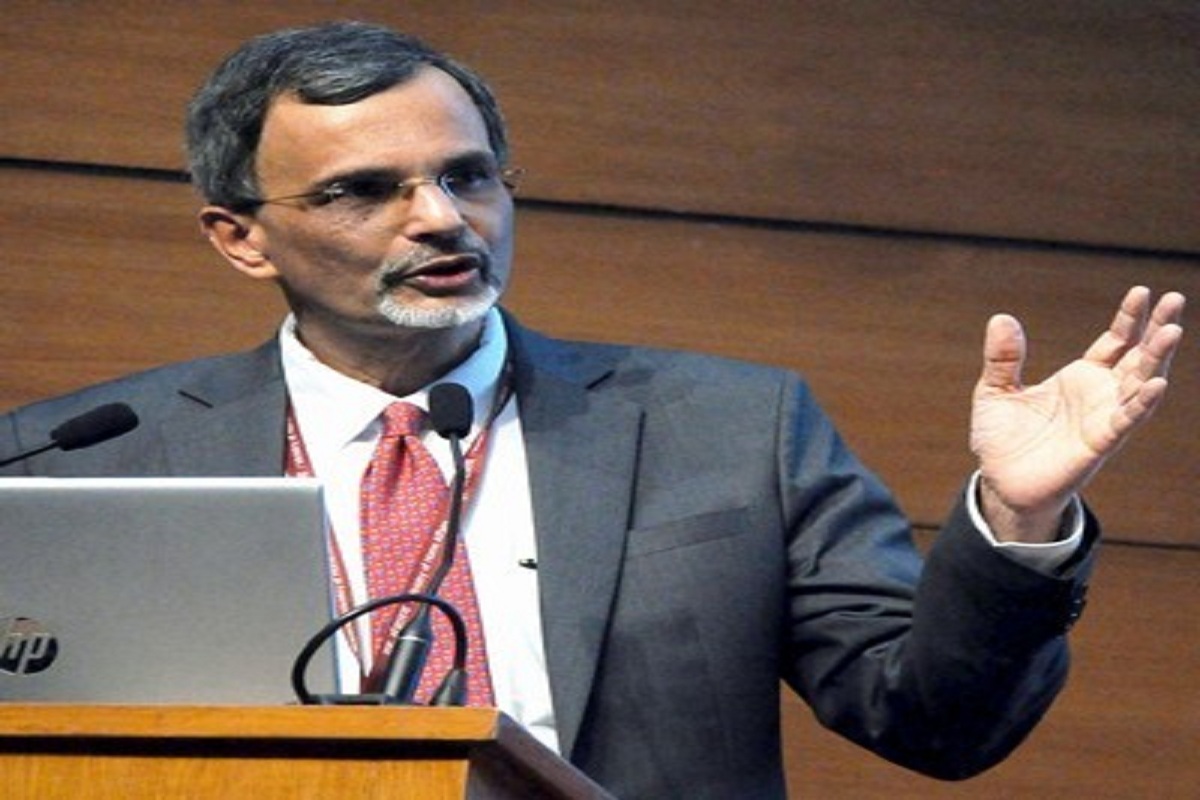
Chief Economic Advisor V. Anantha Nageswaran said India’s limited exposure to the global AI investment boom could become an advantage. He noted that if the current rally loses momentum, investors might return to Indian markets. "If the AI boom stumbles, India is well placed to gain," Nageswaran said on the situation.
India's limited exposure to the global artificial intelligence (AI) investment boom could emerge as an advantage over the next year if the rally loses momentum, Chief Economic Advisor V. Anantha Nageswaran has said, expressing confidence that foreign investors would return to Indian markets to tap the country's underlying economic strengths.
Nageswaran acknowledged that the lack of AI-focused investment opportunities in Indian equities has been viewed as a disadvantage by global investors and is among the factors contributing to foreign fund outflows. However, he argued that India could benefit from a shift in global capital towards growth opportunities beyond AI if the current investment boom loses momentum.
"If the AI boom stumbles, India is well placed to gain," Nageswaran said, adding that the absence of an AI-driven investment theme could be seen as a strength a year from now.
He said India could enjoy a "second-mover advantage" in AI, suggesting that investors currently overlooking Indian equities could eventually return as they seek opportunities backed by broader economic growth rather than heavy exposure to the AI trade.
Describing the AI investment narrative as a "borrowing story", Nageswaran said any correction in the sector could prompt global investors to explore alternative markets. He expressed confidence that India's economic growth prospects would make it an attractive destination for such investments.
"I would submit that it is a matter of time before this happens," he said.
Nageswaran said the recent pressure on capital flows and the rupee could be attributed to four external challenges rather than any deterioration in India's economic fundamentals.
These include strained trade and diplomatic ties with the US, the limited availability of AI-focused investment opportunities in Indian markets, the conflict in West Asia and the resulting rise in oil prices, and monetary tightening by central banks worldwide.
Higher crude oil prices are particularly significant for India, which depends heavily on imports to meet its energy requirements. An increase in oil prices can raise the country's import bill, put pressure on the current account balance and weigh on the rupee.
The Indian currency has faced bouts of depreciation and is approaching record lows amid global uncertainties and foreign investor outflows.
However, Nageswaran maintained that the exchange rate alone does not adequately reflect the health of the Indian economy.
"Clearly, the fundamentals are very, very different and healthier right now than what the exchange rate alone might tell you," he said.
Highlighting the economy's resilience, Nageswaran pointed to India's ability to sustain growth of more than 7% despite repeated external shocks in recent years.
He also cited the country's manageable current account deficit, well-capitalised banking sector, low corporate leverage and growing participation of domestic savings in capital markets as key strengths.
These factors, he said, provide a stronger foundation for the economy, even as global developments weigh on investor sentiment and currency movements.
The CEA's remarks come at a time when foreign portfolio investors' sentiment towards Indian equities has been affected by global uncertainties, elevated energy prices and the growing concentration of international investment flows in AI-linked companies and markets.
While the lack of significant AI investment opportunities has been viewed as a weakness for Indian equities, Nageswaran suggested that the same factor could work in the country's favour if investors begin diversifying away from the AI trade.
He argued that a potential reversal in global investment trends could redirect capital towards economies with strong growth prospects and relatively sound macroeconomic fundamentals, positioning India as a potential beneficiary.