
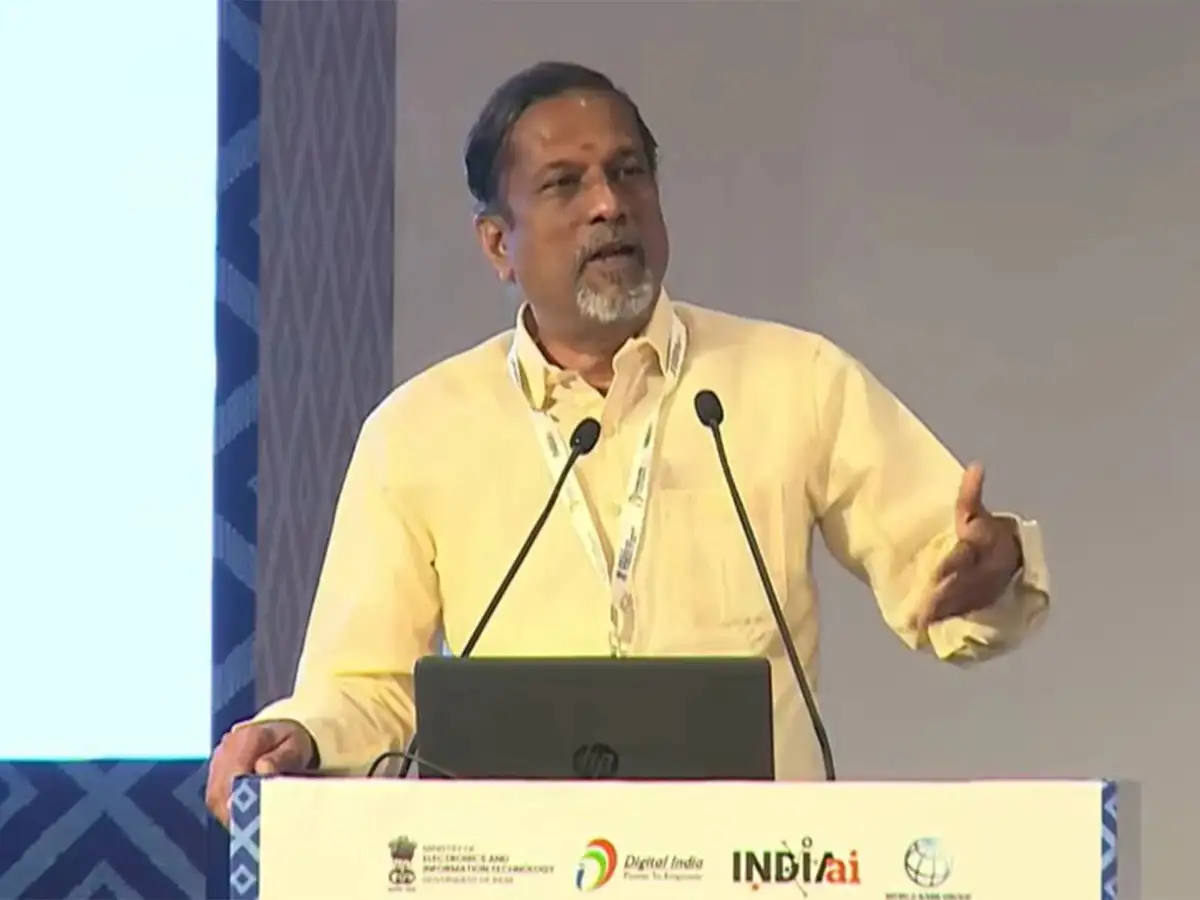
Zoho founder Sridhar Vembu challenged Elon Musk’s claims about Starlink facing license hurdles in India. On Saturday, Vembu said the Indian government does not tolerate monopolies. He showed that India has a competitive economy with low data prices. Meanwhile, Minister Jyotiraditya Scindia confirmed that security assessments for all applicants continue.
Synopsis
Sridhar Vembu responded to Elon Musk's claims regarding regulatory obstacles for Starlink in India. Vembu highlighted India's competitive economy and low data prices benefiting consumers. He emphasized that the Indian government does not tolerate monopolies in the industry. Union Communications Minister Jyotiraditya Scindia confirmed that multiple companies, including Starlink, are seeking licenses. Security assessments are ongoing for all license applicants before commercial operations can begin.
Listen to this article in summarized format
Zoho Co-Founder and Chief Scientist Sridhar Vembu has taken on SpaceX CEO Elon Musk after the latter claimed plans for his company Starlink's satellite communications license were facing roadblocks in India.
In a post on X on Saturday, Vembu stated that the Indian Government does not tolerate monopolies and claimed that Musk's firm Tesla was benefiting from the US barring Chinese EV makers from its market.
"India has the among the lowest data prices in the world. It is so good that I don't even bother to connect to local Wifi when I travel in India and just tether my phone to work on my computer. Indians routinely have dual SIM phones with large data plans because they are so affordable. Ambani's launch of Jio is directly responsible for the low data prices Indians enjoy. India has among the lowest drug prices in the world (and going lower still). People who visit India buy medicines to take home quite regularly now," Vembu posted on X.
"India has among the lowest cost payment systems in the world in UPI. On the other hand, Tesla is protected from Chinese competition in the US market, keeping EV prices higher in America than elsewhere. Prime Minister Modi has worked hard to create a competitive economy where the benefits flow to the average Indian. His government does not tolerate monopolies. He has also actively promoted and encouraged a massive surge in startups and that is the best signal of a highly competitive economy. Directly due to Modi government policy, Indian startups are making major advances in low-cost rockets and that poses a threat to SpaceX the same say the Chinese EVs threaten Tesla. These are the facts Elon," he added.
In the US, Chinese EV's face heavy tariff structures and strict regulatory barriers including bars on software which effectively prevents them from the US market. Tesla, however, manufactures and sells its EVs in China.
Sridhar Vembu's assertion comes after Musk stepped up his attack on the Indian Government and certain corporates in an attempt to push Starlink's commercial license plans.
In a post on X, on Friday night, Musk claimed that Starlink could change the lives of areas in India with no internet access, even as he singled out one company's boss for attack.
"Dear Prime Minister Ambani, please accept my humble apologies for not realizing that you are the real boss of India. Naturally, you would prefer to maintain your monopolistic exploitation of the great people of India, but would you nonetheless consider allowing Starlink to compete? There are many areas of India, as there are in all countries, with no Internet access, which denies children the opportunity for education and for small businesses the opportunity to sell their goods to a global market. Starlink would change their lives for the better. Thank you," his post read.
"Also, Starlink has proven to be essential for saving lives during natural disasters throughout the world, when all other communications systems have failed, so you would also be helping save men, women and children throughout India," he added.
This post by X by Musk followed an unequivocal assertion by Union Communications Minister Jyotiraditya Scindia, who on Friday stated that there was no question of allowing any monopoly in the sphere of Satellite communications and that three parties are in line for final approval for commercial licenses.
"Let me be very clear. India does not allow a monopoly in any sector. And therefore, even as Satcom is concerned there is not a single licensee that has been chosen. Licenses have been given to everyone who wants to provide these licenses. And today there are three licenses that are out there. There is a lot of conversation about a particular party. But there are three parties that have got licenses. There is Reliance Jio, there is OneWeb, and there is Starlink. And there is another party that is also interested in procuring a license. Now that process has to be followed by that party, that's Amazon," the Minister said.
Scindia said that India is close to taking a final decision on the pricing framework for satellite communication services and all licensed operators, including Starlink, must meet security requirements before they can proceed towards commercial operations.
Elon Musk had earlier alleged that Starlink was being blocked by powerful business interests despite spending five years complying with Indian requirements.
The Ministry of Communications had rejected those allegations of unfair treatment, saying all three licensed operators were at broadly the same regulatory stage. It said security assessments were under way for all three and that each could proceed to the next step of seeking spectrum assignment after completing the required process.
(Catch all the Technology News News, and Latest News Updates on The Economic Times.)