
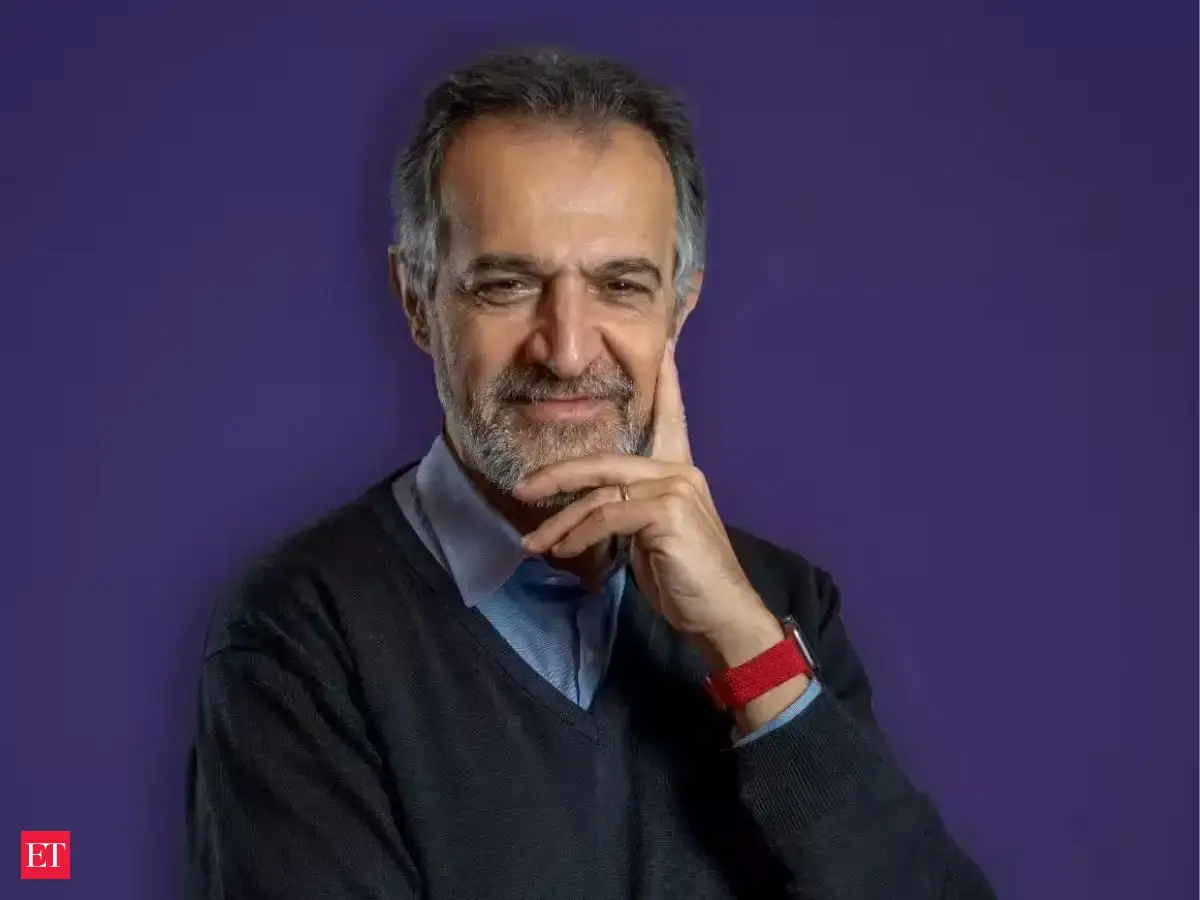
Verlinvest CEO Roberto Italia said India’s aspirational middle class and young population provide a unique demographic edge. The firm plans to invest 1 billion euros in India over five years. "A very substantial proportion of the Indian society is becoming or has the ambition to become middle class," Italia said.
Synopsis
India’s expanding aspirational middle class and young population give the country a demographic advantage and strong consumption potential, Verlinvest CEO Roberto Italia told ET. The Belgian family-backed investment firm plans to deploy euro 1 billion in India over five years, targeting consumer sectors including healthcare, fitness, entertainment and digital content.
Mumbai: An aspirational middle class that does not shy away from spending and understands the importance of education gives India a demographic edge like no other economy, said the executive who manages 2 billion of assets for a few Belgian families that are long-standing shareholders of the largest beer group in the world, AB Inbev.
Their 31-year-old pool of evergreen capital makes Verlinvest one of the largest backers of consumer brands like Vita Coco, Oatly, Juicy Chemistry, Chewy, Epigamia and Wakefit.
"A very substantial proportion of the Indian society is becoming or has the ambition to become middle class. That is emerging from an ability to envision for themselves a future that is going to be brighter than today," Verlinvest CEO Roberto Italia, 60, told ET in an interview. "That prompts their ability and willingness to spend."
Even in the age of artificial intelligence and amid fears of job losses, the young population of India will remain a strategic asset. "This economy is different from the rest of the world for having a fantastic demographic profile," he said.
Pervasive Dynamism
"At every step of the way, India gives me an injection of adrenaline that I rarely get in the West," Italia said.
Live Events
Such dynamism, according to Italia, is pervasive across the country, from big metropolises like Mumbai - which he compares to the vibrancy of New York City in the 1990s - to even smaller towns.
"That kind of energy is going to benefit the whole country," he said. "Even in smaller cities like Chandigarh or Coimbatore, you detect elements of entrepreneurship within the society that you wouldn't be able to get in the provinces of France, the provinces of Germany. And I believe that is at the heart of a society and an economy that will push towards growth."
With India already returning the capital invested, Verlinvest is keen to crank up its play with investment plans of euro 1 billion over the next five years.
"We are getting more aggressive because India has done so well," said Arjun Anand, Verlinvest's Asia head. "We certainly see ourselves deploying euro 100-200 million a year in India. We go all the way from small companies in ventures to control deals."
Sectors like health, fitness, live entertainment, digital content, sneakers are the next pockets of growth.
Data revolution
A former PE executive who earned his stripes in Warburg Pincus, Italia was part of the team that backed Sunil Mittal's Bharti Airtel in the mid 1990s, heralding the private equity boom in the country. Three decades later, he feels telecom players like Mukesh Ambani's IPO-bound Jio Platforms are redrawing the consumption landscape once again.
From food retail to quick commerce, online travel to financial services, nearly every means of consumption gets channelled and amplified through digital "tools," he said.
"People cannot live without mobile phones," he said. "Such profound transformation wasn't visible 30 years ago." India's digital revolution made technology available to a wider population.
"We collect information, we disseminate information and with it we become protagonists of economic activity," said Italia, a Parma born, Swiss resident. This transformation is also spawning new economic activities that are playing a pivotal role in the way Indians buy and spend and even engage socially.
"Think about being an influencer nowadays as a type of activity that did not exist a few years ago," he said. "With bandwidth being available at unprecedented speed levels, telecom today has changed into a necessary element that helps one to relate to society altogether. And consumer spending is a byproduct of that."
Brands to services
With its roots in the alcobev industry - having marquee brands like Budweiser, Corona, Hoegaarden and Stella Artois - Verlinvest has been a very early investor in global beverage companies such as Vita Coco and Oatly that have grown substantially. In India, Sula was its first bet, which is now fully divested. Lahori (Zeera), Blue Tokai and Kopi Kenangan of Indonesia, Southeast Asia's first unicorn in the food and beverage space, and VitaminWater came later. More recently, the firm has started focusing on additional facets of consumer-facing businesses that went beyond brand pull, providing an experience or a service. Healthcare services, for example, is a key focus. Among others, it has invested $75 million for a 20% stake in Eye Foundation, an ophthalmology chain, besides Red Sun, a senior care provider in China.
(You can now subscribe to our Economic Times WhatsApp channel)
Airlines Q2 turbulence: Fewer passengers, rising fares and a crude shock
The NBFC saga - Part 1: How RBI moved from protecting depositors to policing systemic risk