
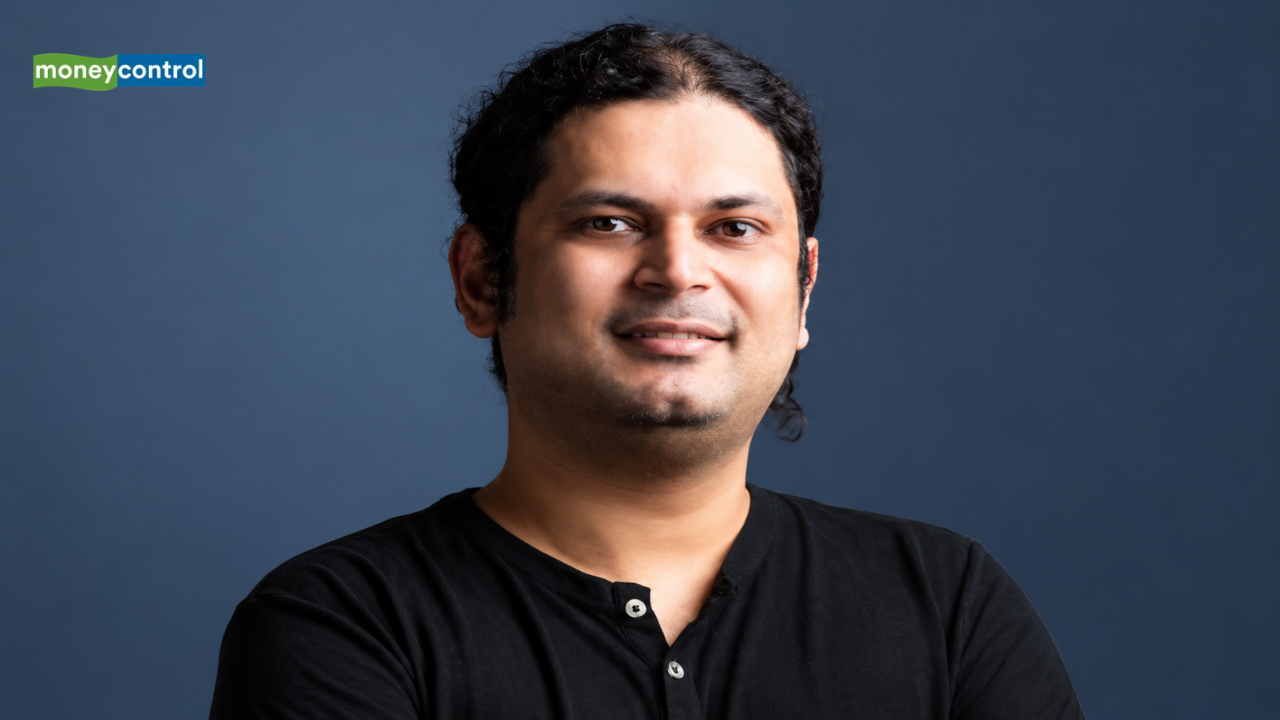
Amrit Acharya returned to India in January 2018 after his US visa became uncertain. He teamed up with his IIT classmate Srinath Ramakkrushnan to start Zetwerk in May 2018. The company grew into a Rs 26,000-crore manufacturing business by using technology to connect large companies with reliable suppliers across India.
An uncertain visa situation prompted Amrit Acharya to leave a well-paying job in the US and return to India in January 2018. What followed was a venture that would grow into Zetwerk, a business-to-business (B2B) manufacturing company operating across sectors such as electronics, renewable energy, aerospace and defence. An IIT Madras graduate with an MBA from the University of California, Berkeley, Acharya had worked at ITC before joining McKinsey & Company in San Francisco in September 2016. Entrepreneurship, however, was not part of his original career plan. In an interview with Forbes India, Acharya said his decision to leave McKinsey was not driven by dissatisfaction with the company. "McKinsey was great," he recalled. The uncertainty surrounding his US visa, however, meant he had to consider working from different countries. After spending six months in Australia, the prospect of moving to another country for a similar period prompted him to reconsider his plans. His then-girlfriend, now wife, offered a different perspective on the situation. "Uncertainty is not a bad thing necessarily," she told him. The couple eventually returned to India, where Acharya reconnected with his IIT Madras classmate Srinath Ramakkrushnan. The idea for Zetwerk emerged from a problem familiar to manufacturers: finding reliable suppliers, managing procurement costs and ensuring timely delivery. Ramakkrushnan's father ran a steel fabrication business in Coimbatore and frequently encountered difficulties with sourcing materials, supply chains and logistics. Acharya, meanwhile, had gained an early understanding of manufacturing operations during his stint at ITC, where he worked on setting up a factory and dealt with hundreds of suppliers and workers. The two friends saw an opportunity to address these operational challenges using technology. In May 2018, Acharya and Ramakkrushnan founded Zetwerk along with Rahul Sharma and Vishal Chaudhary. The Bengaluru-based venture initially focused on software to help large companies manage supplier databases and manufacturing operations. However, the founders soon realised that software alone would not address the trust deficit between manufacturers and suppliers. Original equipment manufacturers (OEMs) needed dependable partners who could handle production, quality and delivery within agreed budgets. That insight prompted a change in the business model. Instead of remaining a software-as-a-service (SaaS) company, Zetwerk evolved into a manufacturing marketplace connecting businesses with suppliers and coordinating production through technology. The shift also raised concerns about how investors would respond, as the initial funding commitments had been made for the software-led model. Acharya recalled being "genuinely worried" about the transition. However, the investors backed the change in direction. Zetwerk raised around $1 million in seed funding in 2018, followed by a $9 million Series A round later that year, according to the company's early funding history. Subsequent investments helped it expand its manufacturing network and customer base. Zetwerk's early growth was supported by increasing demand for outsourced manufacturing. The company coordinated the production of made-to-order industrial components, allowing customers to work with suppliers through a technology-enabled platform. But the Covid-19 pandemic disrupted operations and brought business activity close to a standstill. In an interview with BusinessLine, Acharya said the company's operations effectively fell to zero during the crisis. The founders responded by exploring new manufacturing categories, including electronics and printed circuit boards (PCBs), rather than depending on their existing business alone. The move helped Zetwerk broaden its presence beyond steel fabrication and industrial components into sectors such as renewables, automotive, electronics, aerospace and defence. The company subsequently scaled up its manufacturing capabilities and began undertaking larger industrial projects. These included fabricating around 10,000 metric tonnes of steel girders for the Mumbai-Ahmedabad bullet train corridor, a project Acharya valued at approximately Rs 150 crore. Zetwerk has also expanded its presence in renewable energy manufacturing. It secured an order from NTPC to manufacture and supply solar photovoltaic modules for the 1,200 MW Khavda solar project, with the contract reported to be worth around Rs 2,500 crore. Zetwerk's expansion has translated into a substantial increase in revenue over the years. Consolidated revenue rose from Rs 330.92 crore in FY20 to Rs 5,061.82 crore in FY22 and Rs 14,612.05 crore in FY24, according to Tracxn, a private markets data provider. However, the company has also faced pressure on its bottom line as it scaled operations. In FY24, Zetwerk reported a consolidated net loss of Rs 917.94 crore. Revenue declined 11% year-on-year to Rs 12,980.67 crore in FY25, according to the financial figures available on Tracxn. At the same time, operating performance improved. EBITDA rose to Rs 328.70 crore in FY25, up from Rs 223.17 crore in FY23, while the net loss narrowed to Rs 370.71 crore from nearly Rs 918 crore a year earlier. Acharya has emphasised the importance of profitability alongside growth. "To me, being profitable is a bigger achievement than being a unicorn," he told Forbes India. The company crossed the unicorn threshold in 2021 after raising a Series E funding round that valued it at more than $1 billion. As per Tracxn data, Zetwerk's latest valuation stands at about $2.75 billion (around Rs 26,000 crore), marked as of 3 Jul 2026.