
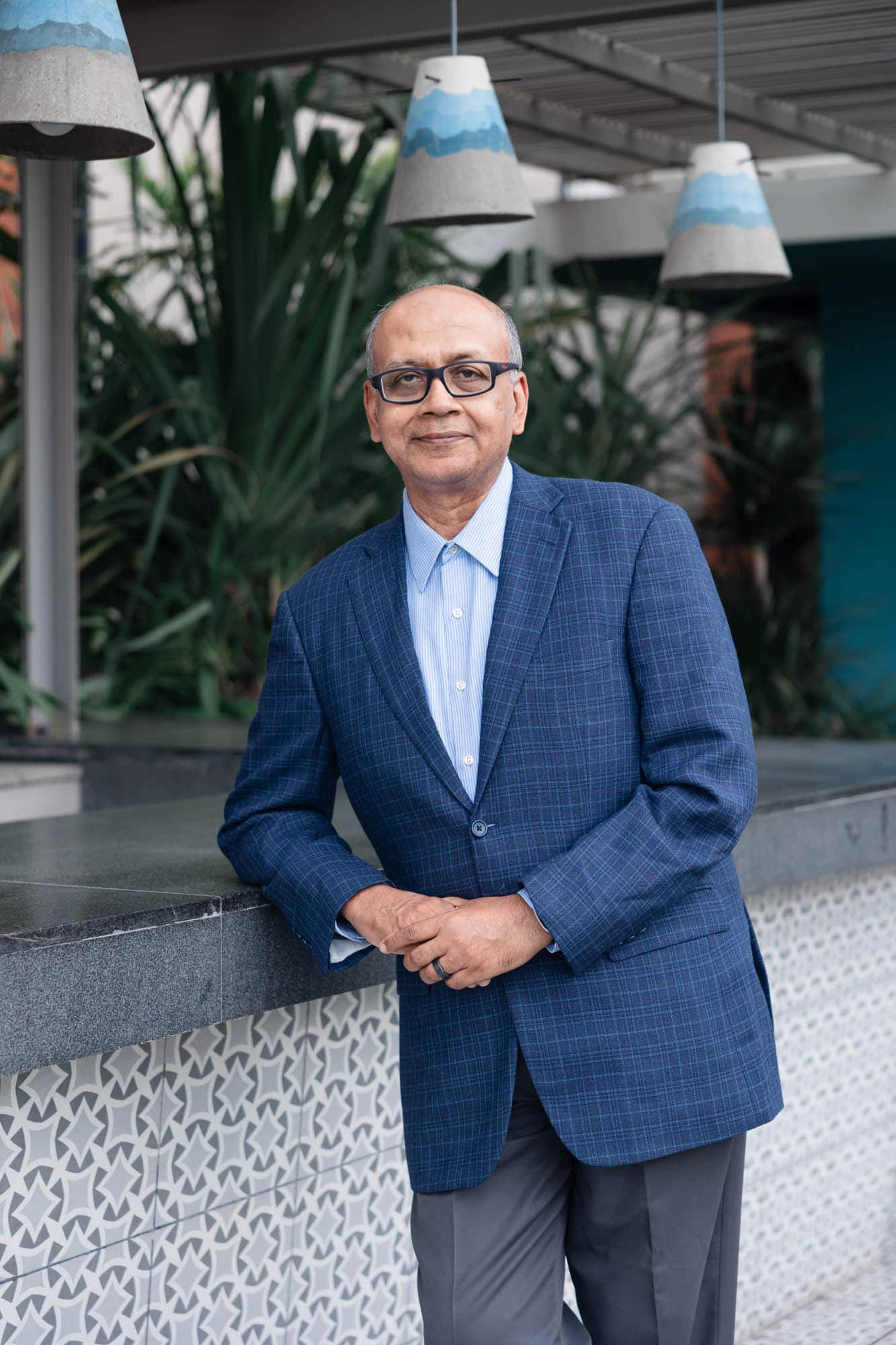
Artificial intelligence could shorten the journey Indian startups take from inception to the public markets, according to Accel’s Subrata Mitra. He said, “The faster revenue growth of some AI companies could allow them to approach the public markets much sooner.” Many firms now reach IPO scale in less time.
Market Mastery
Webinar by Vishal Malkan
Find the weak links
in your portfolio by Vishal Malkan
Artificial intelligence could shorten the journey Indian startups take from inception to the public markets, according to venture firm Accel’s founding partner Subrata Mitra.
He was speaking exclusively with Moneycontrol on the eve of its portfolio company Moneyview’s listing on October 1.
Mitra said the latest generation of AI companies could reach IPO scale in a fraction of the time some of the country's earliest technology startups did.
“The faster revenue growth of some AI companies could allow them to approach the public markets much sooner than earlier generations of startups. With each generation, I think you will see things moving faster,” Mitra said.
He added that the revenue scale of some of these AI companies is also growing much faster than that of the corresponding SaaS (software as a service) firms of the last decade.
“So, to that extent, we think these companies might go public sooner,” Mitra said.
However, Mitra said that applying a uniform timeline to all AI companies might not work. He pointed to the different economics and scale requirements of companies targeting the US market, while arguing that some AI businesses could reach the revenue thresholds required for an Indian IPO much faster.
“For an India IPO, for some of these AI companies, because the scale of revenue is growing much faster, it is likely to happen. It should not take 15 years. I don't know how long it will take,” he said.
Moneyview listing
His comments come as Moneyview, one of Accel's early bets, listed on Indian stock markets on October 1, 12 years after incorporation. Moneyview was founded in 2014, while Accel's much earlier portfolio company, Flipkart, was founded in 2007 and has yet to list. Mitra pointed to the contrast as evidence of how the startup ecosystem is changing.
The comments come at a significant point for Accel, which has begun to see a larger part of its portfolio move into the public markets. PhonePe, the largest digital payments company in the country, is aiming to list by the end of the current financial year.
Rental and consumer-finance platform RentoMojo recently listed after an 11-year journey, while Moneyview is the latest Accel-backed company to enter the public markets.
In an earlier interview with Moneycontrol, Accel partner Prashanth Prakash had said that the ability of a startup to reach the IPO stage matters more than the valuation it achieves at the time, with public markets ultimately determining the right price.
Going public at a discount
Moneyview is going public at a significant discount to the earlier private funding rounds. The company was last valued at around Rs 10,000 crore in 2024, while the IPO valuation is around Rs 6,000 crore.
Mitra has been associated with Accel's investment in fintech firm Moneyview since its early years. He pointed out that valuation can catch up in the public markets and the venture firm is not selling much of its stake, with the upside expected to come sooner rather than later.
Moneyview’s IPO was subscribed 100 times, and the company’s topline has grown by almost three times in the last two years. Mitra said that Accel would not be selling much of its stake.
“The good thing about being public, as opposed to selling a company, is that you get multiple quarters to create your returns. And I am sure the company has a massive forward-looking potential to become much bigger in the public markets,” Mitra said.
Finding product-market fit
Moneyview uses transaction SMS data to build a personal-finance management product. The business subsequently experimented with investment products before identifying consumer lending as the larger opportunity.
The company has now built an asset-light lending model, distributing loans through partners while using data and underwriting capabilities to assess borrowers.
“The big thing was then to do off-book lending. Once they are satisfied with your ability to underwrite a particular person or loan,” Mitra said, adding that lenders slowly became comfortable partnering with the firm.
While the 2015-2021 period saw multiple digital lending startups emerge, several of them shut down after growing too fast and ended up having high non-performing assets and huge losses.
Faster IPOs beyond AI
Mitra said that until Moneyview found the balance, the company decided to grow conservatively, which in turn made the public listing a longer journey.
Moneyview's registered user base stood at 14.03 crore as of June 2026, while its personal-loan assets under management (AUM) had reached Rs 22,520 crore. The company says around 75 percent of its lending is managed off-balance-sheet through lending partners.
Even beyond AI, Mitra believes that the next generation of companies may not need the same amount of time.
“Compared with today's IPOs, I think ten years from now, companies will hopefully IPO faster,” he said.